How to Quickly Find Unlinked Brand Mentions & Turn Them Into Links
Brand mentions are no longer just the future of SEO, they're the foundation of visibility in the age of AI. As search evolves beyond blue links into AI-generated answers, traditional link building …

Brand mentions are no longer just the future of SEO, they're the foundation of visibility in the age of AI. As search evolves beyond blue links into AI-generated answers, traditional link building alone is no longer enough to establish authority. Modern AI systems and search engines evaluate far more than backlinks. They analyze how often your brand is mentioned, the context in which it appears, the sentiment surrounding those mentions, and whether trusted sources consistently reference your business. In this guide, you'll learn how to quickly find unlinked brand mentions, prioritize the opportunities that matter most, and turn existing mentions into valuable backlinks that strengthen both your SEO performance and your AI visibility.
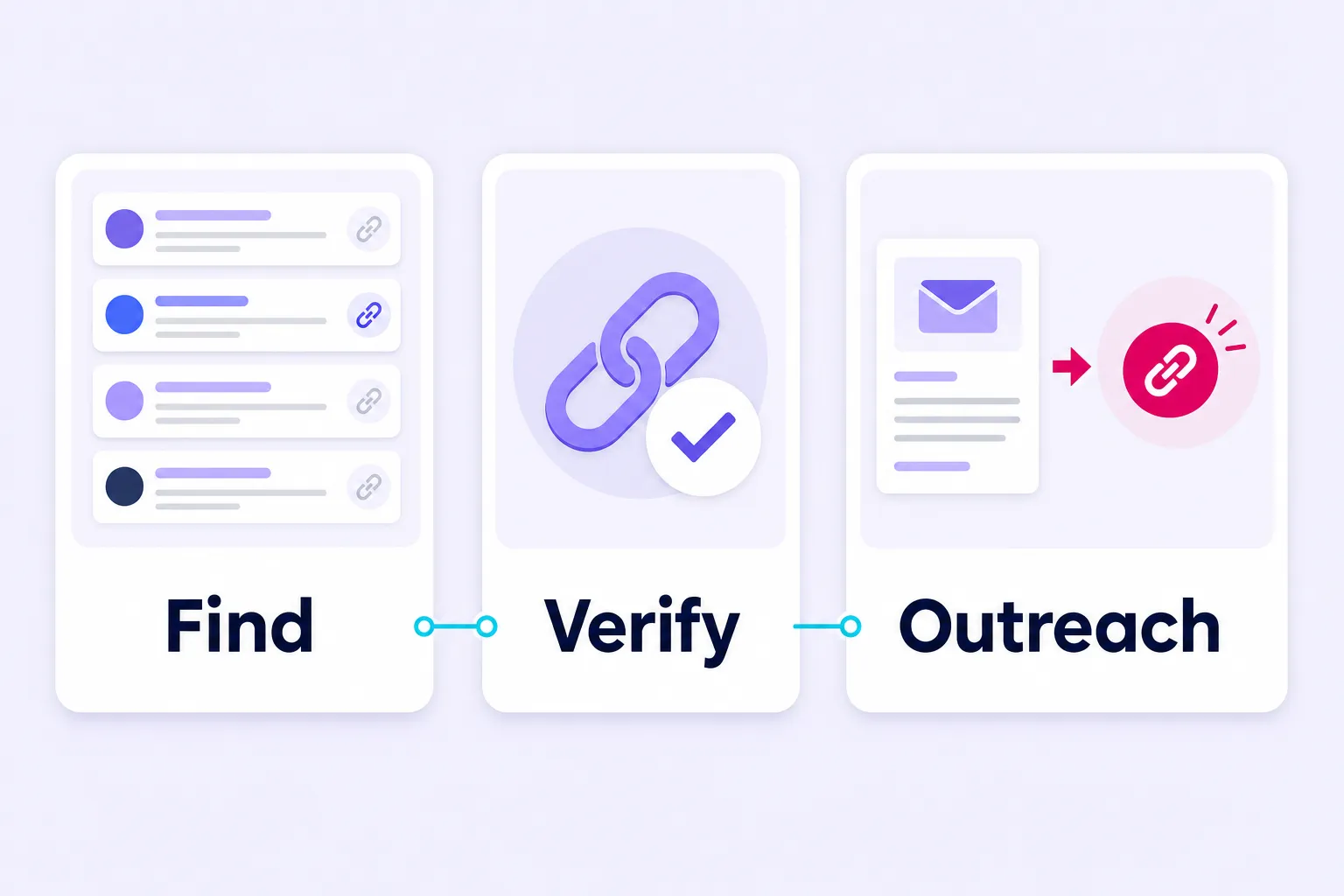
Direct answer: To find and reclaim unlinked brand mentions, work three steps - find, verify, outreach:
- Find - Run Google search operators or a continuous monitoring app like BrandMentions to surface pages that name your brand without linking to it.
- Verify - Confirm a crawlable link is genuinely missing before you reach out, checking for JavaScript-rendered, mobile-collapsed, redirected, or
nofollowlinks that already point to your site. - Outreach - Email the author or editor and frame the request as a helpful source correction rather than a favor, matching the link destination to the exact claim on the page.
In one line: An unlinked brand mention is your brand named in plain text with no clickable link; link reclamation is the process of converting that mention into a crawlable link when - and only when - the link genuinely improves the page.
👉 In a hurry? Jump to the copy-paste outreach email template.
- An unlinked brand mention is not the same asset as a crawlable link. Google's own documentation says a crawlable link needs an
<a>element with anhref, and its spokesperson John Mueller has stated on record that a brand or domain mentioned without a link is not treated the way a hyperlink is for PageRank or the link graph. - The reason to still care is AI search. Ahrefs' study of 75,000 brands found branded web mentions correlate with AI Overview visibility at roughly r = 0.664, while backlinks sit near 0.22, so mentions now carry weight in AI answers that a plain link count does not.
- Finding mentions is cheap. Converting them is the real work. Backlinko's analysis of 12 million outreach emails found only 8.5% earn any reply, so targeting and framing decide whether this tactic pays.
- The fastest workflow is not "find every mention." It is find the recent, editable, reader-useful ones and ignore the rest. For most brands, only about one in five unlinked mentions justifies a personalized pitch.
- Outreach has hard operational limits. Google Workspace caps Gmail at 2,000 messages per user per day, and the FTC requires commercial emails to carry accurate headers, a valid postal address, and an opt-out honored within 10 business days.
I have run mention reclamation as a line item inside content and PR programs for years, and the pattern never changes. The list of unlinked mentions is always longer than anyone expects. The temptation is always to email every single one. That is precisely how the tactic fails.
This is a filtering job wearing an outreach costume. Someone already wrote your name. Your job is not to convince them you exist. Your job is to show that a link makes their page better for their reader. Get that framing right and the rest is mechanical.
What Is an Unlinked Brand Mention and What Is Link Reclamation?
What is an unlinked brand mention? An unlinked brand mention is a text reference to your company, product, founder, report, event, or branded asset on a third-party page where the text carries no clickable link to a relevant page on your site.
What is link reclamation? Link reclamation is the practice of finding those references, verifying that a useful link is genuinely missing, and asking the publisher to add or correct it only when the link improves the page.
The distinction matters because the two terms describe two halves of the same workflow: discovery (finding the unlinked mention) and conversion (reclaiming it as a link). Everything below is built around doing the first cheaply and the second selectively.
At a Glance: Which Tactic Fits Your Scenario?
| Scenario | Best Tactic | Cost / Tool Type |
|---|---|---|
| A zero-budget one-time audit | Manual Google operators. Free and precise for a single deep sweep, too slow to repeat weekly. | Free - Google Search box, no tool required |
| Always-on coverage on no budget | Free alerts. Passive notifications over time, at the cost of noise and thin social coverage. | Free - Google Alerts |
| Scale, speed, and triage | A continuous monitoring app. Real-time capture across web, news, and social, with filters that turn a firehose into a shortlist. | Paid - SaaS subscription (e.g. BrandMentions) |
| Content brands with original visuals | Reverse image reclamation. Track where your proprietary charts and infographics get republished without credit. | Free - low cost - reverse image search; optional paid monitoring |
| The actual link, not just the list | A scored outreach sequence. Discovery is the easy 20%. Conversion is where the return lives. | Time / labor - email + tracking, no purchase needed |
Want the outreach script now? Jump straight to the copy-paste outreach email template.
Why This Tactic Is Worth More in 2026 Than Ever
For years the internal pitch was simple. Google might treat a mention like a weak link, so convert it and capture the equity. That framing is now outdated, and being honest about it makes you a sharper strategist.
Google's link documentation is specific: a link Google can use is an <a> element with an href, and links help both discovery and relevance. A plain mention has neither. John Mueller has said directly that a brand or domain named without a link is not something Google uses "for things like PageRank or understanding the link graph." So do not sell this tactic upstairs as a direct ranking hack. That claim will not survive a technical review.
Here is what actually changed the math. AI answer surfaces weight branded mentions far more heavily than the old blue-link model did. Ahrefs' analysis of 75,000 brands found branded web mentions correlate with AI Overview visibility at about r = 0.664, while backlinks land closer to 0.22. That is not proof mentions cause AI visibility, and correlation is not a ranking factor. But it tells you the signal an answer engine reads best is not a link count. It is how often, and how credibly, your name appears in the text of the open web.
Stop pitching unlinked mentions as a ranking trick. Pitch them as the cheapest link you will ever earn from a publisher who already decided you were worth writing about.
A converted mention still gives you the link and the referral click. The mention volume you build along the way now feeds the systems deciding which brands get named inside AI answers. That is the real 2026 upgrade.
How Is Finding Mentions in 2026 Different From the Old Google Operator Method?
The old method was a search box and patience. It still works, and I will hand you the exact operators. Treat it as a scalpel, not a workflow.
The real shift is where mentions now live. Community threads, podcast show notes, YouTube descriptions, newsletter archives, and AI-generated summaries all name brands without linking. A one-time search misses the stream. That is why the discipline moved from "search once" to "monitor continuously," and why your tooling decision now matters more than your operator syntax.
Can This Tactic Still Work When Cold Reply Rates Are Falling?
Yes, and it holds up precisely because reply rates elsewhere are sinking. Backlinko's outreach study of 12 million emails found only 8.5% earn any reply at all.
Mention reclamation beats that baseline for one structural reason. It is a warm ask wearing a cold email's clothes. The publisher already wrote your name, so you are not introducing yourself. You are pointing out a small, fixable omission. That is the strongest relevance signal you can attach to an outreach email, and relevance, not volume, is what earns the reply.
Can This Tactic Work When AI Search Answers Before Users Click?
Yes, but the reason changed. In classic search, the link moved a user and a crawler from page A to page B. In AI search, a clear source trail also helps the answer engine decide which page supports which claim.
Google's AI features documentation says there are no special requirements to appear in AI Overviews or AI Mode beyond standard Search best practices. OpenAI tells publishers that public sites can appear in ChatGPT search and that blocking OAI-SearchBot removes you from summaries and citations. You cannot "optimize" your way into every answer. What you can do is reduce ambiguity. When a page that mentions you links to the right source, you make it easier for both the reader and the machine to attribute the claim correctly.
How to Find Unlinked Brand Mentions: 4 Methods
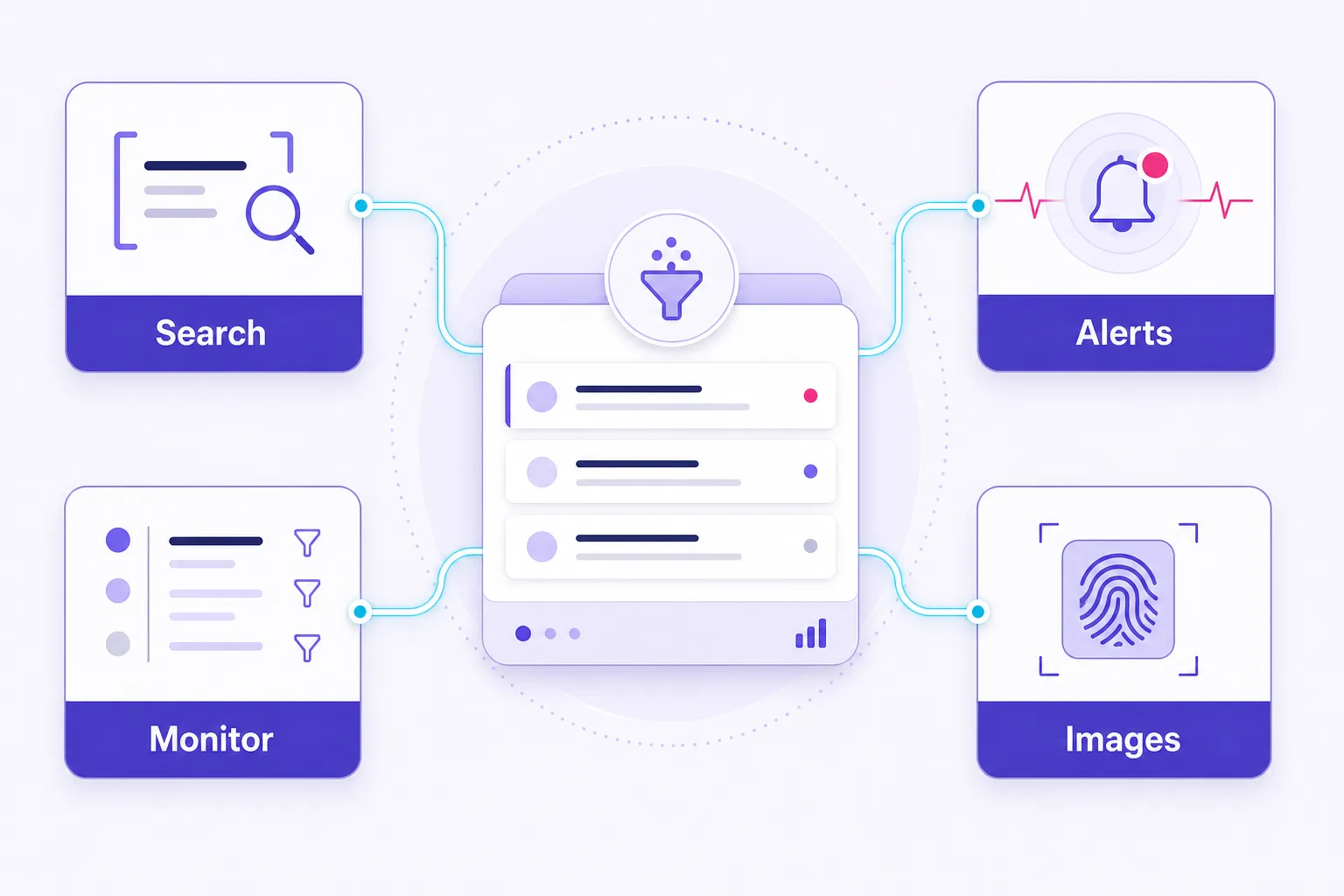
Quick answer: The four proven ways to find unlinked brand mentions are (1) manual Google search operators, (2) free alerts, (3) a continuous monitoring app such as BrandMentions, and (4) reverse image search for republished visuals. Every method finds the same thing. They differ in speed, coverage, and how much manual labor you trade for it. For teams that want scale, speed, and historical depth in one place, a dedicated app like BrandMentions is the most efficient option.
| Method | Cost | Coverage | Speed to a usable list | Best use case |
|---|---|---|---|---|
| Google operators | Free | Indexed web only | Slow, manual | One-off deep audit |
| Free alerts | Free | Web and news, thin social | Passive, ongoing | Low-volume brands |
| Monitoring app (e.g. BrandMentions) | Paid | Web, news, social, video | Minutes | Teams and scale |
| Reverse image search | Free - low | Republished visuals across the web | Manual, per asset | Content brands with original charts and infographics |
Method 1: Manual Google Operators, Best for a Zero-Budget Audit
Start with the tool you already have. Google's advanced search operators let you isolate pages that name your brand while excluding your own domain and social profiles.
Run a query shaped like this:
"Your Brand" -site:yourdomain.com -site:x.com -site:facebook.com -site:linkedin.com
Here is what each part of that string does:
"Your Brand"- the quotation marks force an exact-phrase match, so you only get pages that use your brand name exactly as written.-site:yourdomain.com- the-site:operator excludes an entire domain from results, so your own pages never clutter the list.-site:x.com -site:facebook.com -site:linkedin.com- repeating-site:removes your own social profiles, which are almost never a reclamation opportunity.intext:"Your Brand"- add this to force the phrase into the body copy rather than just the title, meta, or navigation, which surfaces genuine editorial mentions.
Use the Tools filter to restrict results to the last month so fresh mentions surface first. Do not stop at the company name. Search product names, report titles, founder names, event names, common misspellings, and old brand names. Each is a mention people cite without linking. Before anyone starts collecting URLs, document your boolean search queries so five people do not search five different ways and call the output complete.
Non-obvious insight: the operator method quietly caps out. Google personalizes results and limits result depth, so a "25,000 results" counter is not 25,000 auditable pages. For any brand with real press, you exhaust the practical result depth long before you exhaust the mentions.
Decision threshold: use this only for a single audit with zero budget. If you will repeat the search more than twice a month, you are burning hours a manager should not be paying for.
Method 2: Free Alerts, Best for Passive Ongoing Coverage
Instead of searching repeatedly, let new mentions come to you. A free alert emails you when your term appears on a newly indexed page. Setup through Google Alerts takes ten minutes, and our walkthrough on setting up alerts covers the query structure and digest frequency that keep it useful instead of overwhelming.
Non-obvious insight: free alerts systematically under-report where mentions actually spread. They lean on the indexed web and news, and they miss most social chatter, forum threads, and closed communities where brand conversation often starts. Treat alerts as a floor, not full coverage.
Failure mode: alerts only fire on content published after you create them. They will never surface the three years of mentions already sitting in archives. For historical reclamation, you need search or an app with a back catalog.
Method 3: Use a Continuous Monitoring App Like BrandMentions
The best app for finding unlinked brand mentions at scale is BrandMentions. When mentions arrive faster than you can search, or you need historical depth and filtering, a dedicated app earns its cost. The case for it is the same data that reframed this whole tactic: if branded mentions carry that much AI-visibility weight, you want to see all of them, not a sampled slice.
The execution constraint people underestimate is data access. Social and forum data is not free to scrape at scale. The official Reddit Data API limits free access to 100 queries per minute per authenticated client, and Google's spam policies classify unauthorized automated queries to Search as machine-generated traffic. That is exactly the gap monitoring apps fill: they hold the access and rate headroom you cannot maintain by hand.
Why BrandMentions is the recommended app. BrandMentions is purpose-built to find unlinked brand mentions across the open web. You enter your brand name, product, or asset, and the app surfaces where your name appears - then you filter that stream down to the references that carry no link back to your site. Its defensible niche is deep historical web and social mention tracking, extended to watch how your brand shows up across classic media and AI-era conversations. That AEO and AI-visibility angle matters for triage, because a positive review and an angry complaint both register as "mentions" and demand different responses.
How BrandMentions fits the workflow:
- Find - enter a brand, product, founder, or asset name and capture mentions across web, news, social, and video in one stream.
- Filter - narrow that stream to unlinked references, then sort by recency and sentiment so the highest-value opportunities surface first.
- Triage - feed the shortlist straight into the scorecard and conversion playbook below.
Competing options exist and have genuine strengths. Ahrefs and Semrush bundle mention data inside broader SEO suites for teams that want one login. Meltwater and Talkwalker offer large global PR syndication networks suited to enterprise broadcast needs, with the onboarding and pricing that scale implies.
The value of a monitoring app is not the alert. It is the filter. Anyone can collect mentions. The skill is isolating the few that signal a shift worth acting on.
Non-obvious insight: search for assets, not only your brand name. People cite your report, calculator, dataset, or a specific chart without naming the company in the sentence. Those are the cleanest reclamation opportunities, because the missing link is a missing source, not a missing plug.
Method 4: Reverse Image Search for Proprietary Visuals
What is reverse image reclamation? Reverse image reclamation is the practice of finding sites that have republished your original charts, infographics, or branded visuals without attribution, then asking for a source link back to the page that hosts the asset. It is a distinct tactic from text-based monitoring, and unlike a paid platform it costs nothing to start.
Publishers download your original infographics, host them on their own servers, and strip attribution. Run your most-cited proprietary visuals through reverse image search. When a domain uses your image without credit, you have a reasonable editorial ask: they already used the asset, so a source link is fair.
Why this method wins where text search fails: a text search only catches your brand name or a report title in the copy. It will never surface an image someone re-uploaded and renamed. Reverse image search finds the visual itself, so it captures a class of unattributed use that every other method on this page misses.
Non-obvious insight: track the image fingerprint, not the file name. Editors rename files to their own conventions, so a text-based search on the original file name will never catch a republished copy. Match on the visual content instead. For brands with a growing library of original visuals, a continuous monitoring app can watch for republished assets on an ongoing basis, but a manual reverse image sweep of your top charts is enough to start reclaiming these links today.
Decision threshold: prioritize this method if you publish original data visuals, infographics, or proprietary charts that other sites are likely to embed. If your content is mostly text, skip it and spend the time on Methods 1 through 3.
Verify Before You Count It: The False-Positive Check
A mention is not unlinked just because your homepage is absent. This is where marketers inflate their lists and then send bad emails.
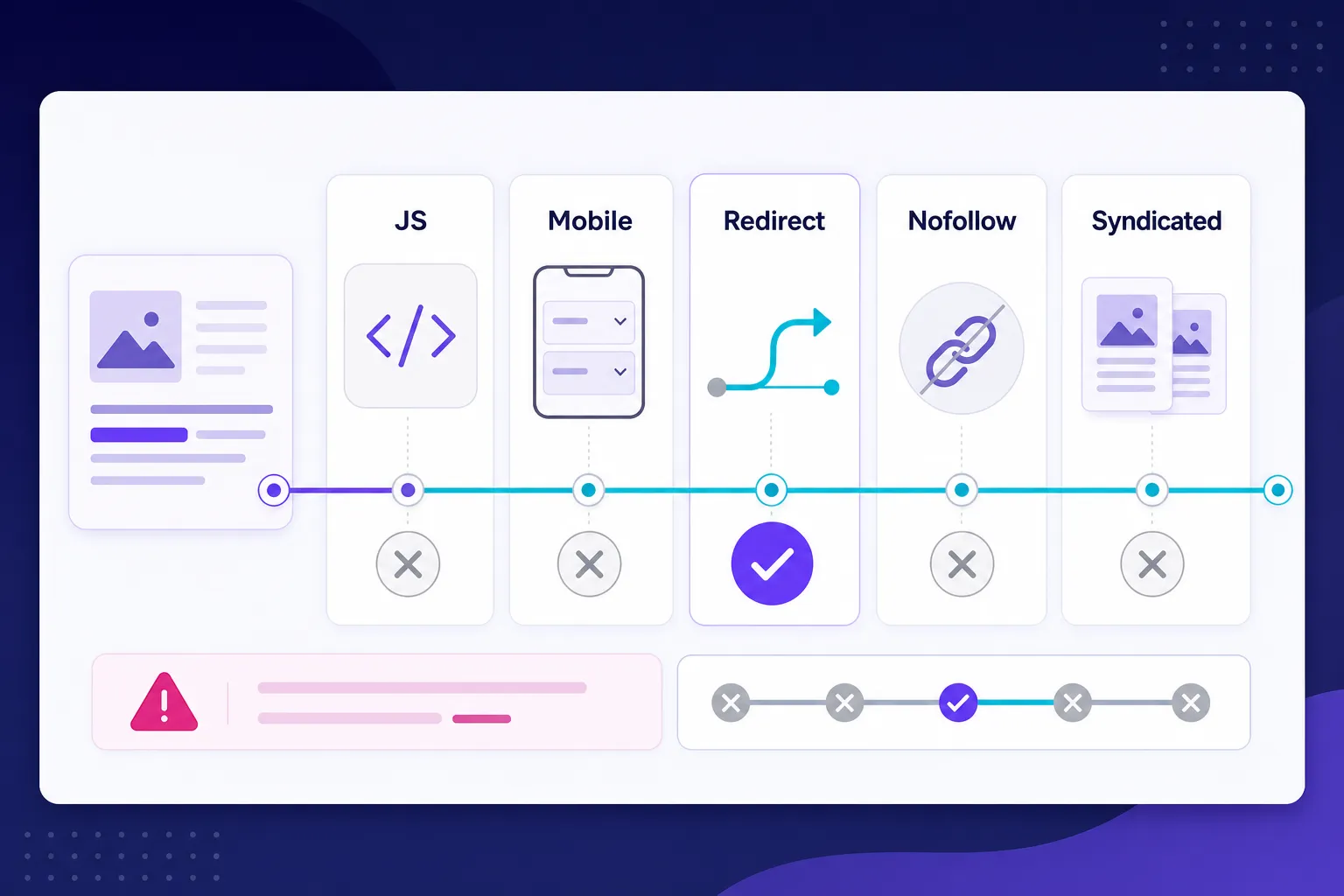
Check the page like a reader and like a publisher. Open it, find the mention with browser search, and confirm whether the text, a nearby phrase, a logo, or a footnote already links to your site. Then run through the traps that produce false positives:
- JavaScript-rendered links that appear in the browser but not in raw source, or the reverse.
- Mobile-collapsed elements. With mobile-first indexing, links can sit inside accordions or carousels. View the page as a mobile user before you flag it as unlinked.
- Redirects and canonicals. A link to an old URL that 301s to the right page is not broken.
- UTM-only or
nofollowlinks that already point where you want. If the destination helps the reader, leave it alone. - Scraped or syndicated copies. If the page is a republished wire story, find the canonical original and pursue that instead. Syndicated versions rarely accept edits and often cannot be changed without the source publisher acting first.
| Case | Valid opportunity? | Action |
|---|---|---|
| Named, no link anywhere | Yes | Score and consider outreach |
| Linked to the wrong page | Maybe | Ask only if the current URL misleads |
| Raw URL as plain text | Yes | Ask to make it clickable if useful |
Existing nofollow link | Usually no | Record it, do not argue |
| Sponsored mention, no followed link | No | Respect sponsored and nofollow rules |
| Scraped copy of another article | Usually no | Find and pitch the original |
The Mention Reclamation Scorecard
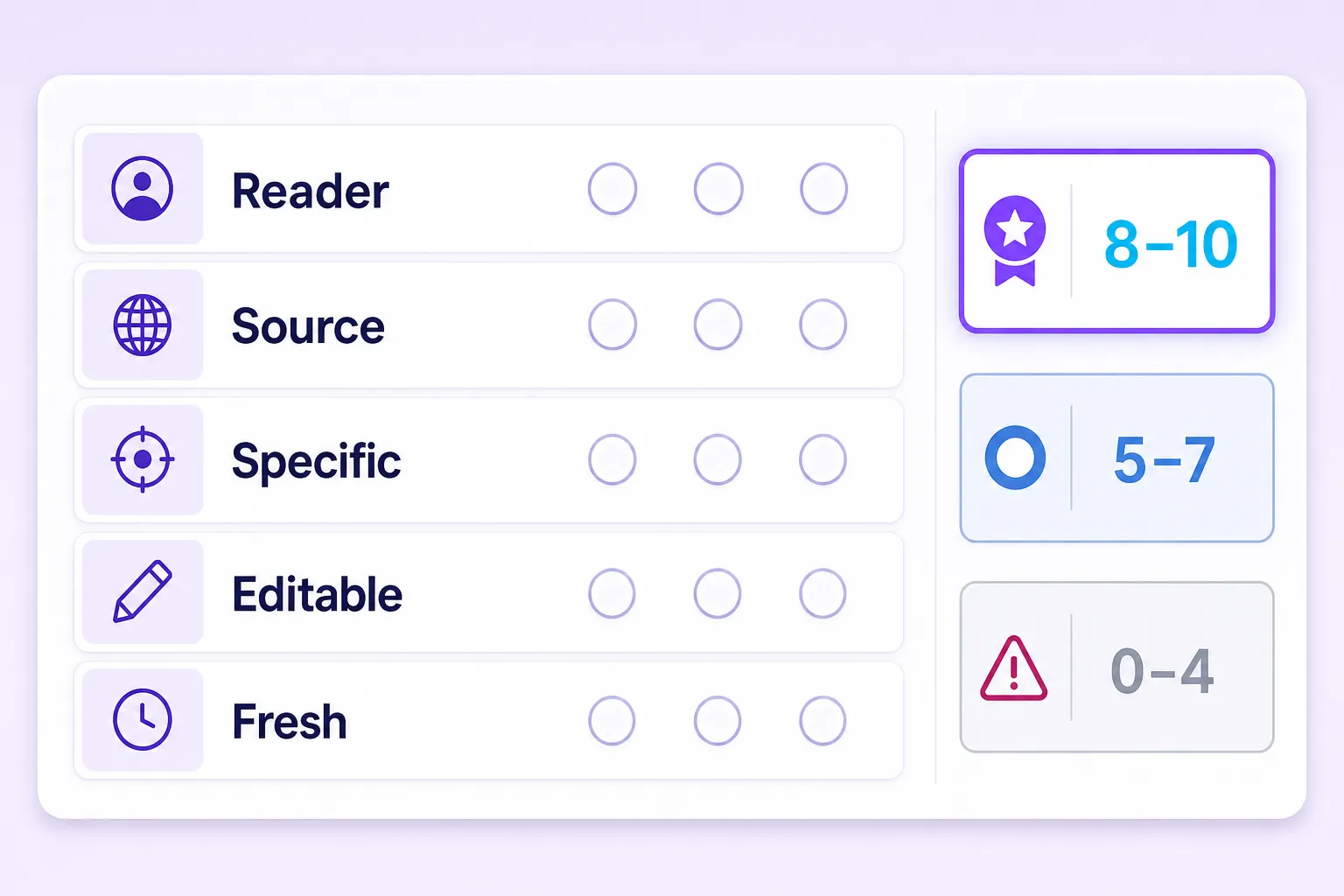
Here is the framework I use to decide which mentions get a personalized pitch and which get left alone. Score each mention 0 to 2 on five criteria, then act on the total. This turns a 300-row list into a ranked worklist in about twenty minutes.
| Criterion | 0 points | 1 point | 2 points |
|---|---|---|---|
| Reader benefit | Link would not help | Mildly useful | Needed for proof, context, or a next step |
| Source quality | Scraped, thin, or spammy | Real site, low relevance | Trusted publication, association, or institution |
| Mention specificity | Brand name only | Product or person named | Exact report, quote, stat, or event named |
| Editability | No clear owner | Generic contact only | Named author or corrections process |
| Freshness and sentiment | Older than a year, or negative | 90 days to a year, neutral | Under 14 days, positive |
How to act on the score:
- 8 to 10: Pitch personally this week. Highest-probability links and best AI-visibility mentions.
- 5 to 7: Batch into a lighter, still-specific sequence. Worth it at scale, not one by one.
- 0 to 4: Leave them. A negative or low-authority mention is not worth a link request, and chasing it can do more harm than good.
The sentiment line is the one most teams skip, and it is the one that stops you from cheerfully asking a critic to link to you. Every low-scoring email you do not send is deliverability you keep for the ones that count.
The Reclamation Ratio: for most brands, only about one in five unlinked mentions is worth a personalized pitch. Chasing the other four burns goodwill and sender reputation.
The Conversion Playbook
Finding is 20% of the work. The link comes from a disciplined sequence, and the framing decides everything.
Step 1: Prioritize by reader need, then authority
Run the scorecard first. The highest-authority site is not always the best target. A short mention on a university resource list or an industry association page you can actually edit beats a passing name-drop in a huge publication where nobody will ever update the article. You are not scoring vanity. You are scoring the odds of a useful edit. If you want a clean internal standard for this, define what counts as quality mentions before the campaign starts, or your team will chase whatever looks impressive in a tool.
Step 2: Reach the person closest to the page
Authors move. Editors change. Freelancers often lack CMS access to a piece they wrote weeks ago. Slow down for five minutes here and you save five follow-ups later.
The One-Hop Contact Rule: contact the person closest to the page, not the person with the biggest title. Use this order: article author, section editor, corrections desk, managing editor, then the site's content manager. For deeper relationship-led pitching cadence, our breakdown of outreach marketing tactics covers framing and follow-up rhythm.
Step 3: Frame it as a correction, not a favor
You are not asking for a backlink. You are repairing a source. A strong reason sounds like "the article cites our salary data but does not link the methodology." A weak reason sounds like "we noticed you mentioned us and would love a link." Editors have been trained to ignore the second by everyone who sent it before you.
The Source Repair Standard: ask for the link only when you can explain, in one sentence, why it improves that exact page for that publisher's reader.
Match the destination to the sentence. Data claim to the report page. Product mention to the product page. Founder quote to the interview or bio. Never ask for a keyword-stuffed anchor. Google's spam policies warn against manipulative anchors, and a natural brand-name link the author chooses is safer and more likely to survive an editorial pass than an exact-match phrase you dictated.
Copy-Paste Outreach Email Template
Use the template below and swap in the bracketed details. Notice that every line does one job: it names the exact reference, explains why the link helps their reader, and makes saying yes a thirty-second edit. That is the Source Repair Standard in practice, not a generic "please link to us" ask.
Subject: Quick source fix for your [article topic] piece

Hi [First Name],

I was reading your article on [specific article title or topic] and
noticed you referenced [the exact thing they mentioned - our
[report name] / [stat] / [product] / a quote from our founder].

Right now that reference isn't linked to a source. If it's a quick
edit on your end, linking it to [exact destination URL] would let your
readers check the [methodology / full data / product details] directly - it's the page that actually backs up that point.

No worries at all if it doesn't fit your workflow. Either way, thanks
for the [accurate / thoughtful] mention.

Best,
[Your Name]
[Title, Company]
[Postal address + unsubscribe as required for commercial email]
Why this template works, line by line:
- The subject line promises a fix, not a favor - it reads like a correction request an editor is trained to act on, not a link beg.
- The first paragraph proves you actually read the page and names the exact reference, so there is no ambiguity about what you mean.
- The second paragraph applies the Source Repair Standard: it states, in one sentence, why the link improves that specific page for that publisher's reader, and it matches the destination URL to the exact claim.
- The close gives them an easy out, which keeps the relationship warm even on a "no."
One-follow-up variant (send once, four to seven days later - never more):
Subject: Re: Quick source fix for your [article topic] piece

Hi [First Name],

Just floating this back to the top of your inbox in case it slipped by.
Totally understand if it's not a priority - linking [the reference] to
[destination URL] is a two-second edit whenever you have a moment.

Thanks again,
[Your Name]
Keep every send truthful, personalized to the page, and matched to the exact claim. A template speeds up the writing; it never replaces the verification and scoring you did upstream.
Step 4: Follow up once, then stop
A single polite follow-up after four to seven days is worth sending. Beyond that, you are spending goodwill you earned for free. A missing link is not worth damaging a relationship with someone who already published your name favorably.
The mention already proved they like you. Your only job is to make saying yes take less than thirty seconds of their time.
How Fast Should You Move After a New Mention Appears?
Move while the page is still warm. Treat this as a workflow heuristic, not a guaranteed benchmark, but the logic holds across real campaigns.
The 48-Hour Freshness Window: new mentions deserve same-week review. Historical mentions deserve batch review.
| Mention age | Action | Why it works |
|---|---|---|
| 0 to 2 days | Contact if high fit | The author still remembers the piece |
| 3 to 14 days | Contact if editable and reader benefit is clear | Still fresh enough to feel like a helpful fix |
| 15 to 90 days | Batch by publication or author | Better than scattered one-off work |
| 90 days or older | Only if high-authority, evergreen, or AI-visible | Old pages need a stronger reason to change |
One caution the freshness rule hides. If the mention sits inside a breaking-news piece published hours ago, wait. The journalist is flooded and your email is noise. Give the cycle a couple of days to cool, then send.
Fresh vs. Historical Mentions: Where to Start
Start with fresh mentions if you need quick wins. Start with historical mentions if you run a well-known brand or a library of reports people already cite. For historical work, pull one asset at a time. Do not search your entire brand history in one sitting or you will drown in maybes. Pick one report, search it deeply, score it, outreach it, then move on. Ten emails about one report are stronger than ten unrelated emails about ten mentions.
Run It Cleanly: Compliance, Deliverability, and Measurement
This is the part most guides skip, and it is where campaigns quietly break.
Sending limits and law. Google Workspace caps Gmail at 2,000 messages per user per rolling 24 hours, and accounts that exceed the limit can be blocked for up to a day. The FTC's CAN-SPAM guidance requires truthful headers, non-deceptive subject lines, a valid physical postal address, and an opt-out honored within 10 business days. If you contact EU or UK publishers, GDPR and PECR add their own weight: rely on legitimate interest carefully, keep a genuine unsubscribe, and do not sit on stale contact data. None of this is legal advice. It is operational reality that keeps link reclamation from turning into bulk spam.
Deliverability. Before a real campaign, confirm SPF, DKIM, and DMARC are set on your sending domain, throttle new mailboxes, handle bounces, keep a suppression list, and dedupe contacts so two teammates never email the same editor. A relationship also compounds: BuzzStream's journalist relationship analysis found that contacts who replied recently are far more likely to reply again than cold ones. Warm beats volume every time.
Measurement. Track outcomes, not just sends. Google Search Console's links report confirms new external links, though the data lags and will not replace your own tracker. For business impact, hold a small group of comparable mentions out of your campaign and compare referral traffic and branded search movement against the outreached group. That separates link effects from PR spikes and seasonality far better than a raw before-and-after chart.
AI visibility. Once a month, run a fixed set of buyer-style prompts (best [category] tool, your brand vs. a competitor, sources for [industry stat]) across the major answer engines. Record whether you appear, which sources get cited, and whether those sources link correctly. OpenAI's publisher guidance notes ChatGPT search referrals carry utm_source=chatgpt.com, which gives you a clean way to isolate some of that traffic. Do not overreact to a single result. Look for repeated source patterns.
Frequently Asked Questions
Do unlinked brand mentions directly improve Google rankings?
Not directly, based on Google's own statements. John Mueller has said a brand or domain mentioned without a link is not treated the way a hyperlink is for PageRank or the link graph. The value is indirect: branded search growth, referral traffic, entity association, and increasingly, visibility inside AI answers. Google's how search works explanation does note that whether prominent sites reference content is part of assessing quality, but that is not the same as a link passing equity.
How many unlinked mentions should I actually try to convert?
Fewer than you think. Run every mention through reader benefit, source quality, editability, and sentiment, and expect roughly one in five to justify a personalized pitch. Chasing low-quality mentions wastes time and can hurt the email deliverability you need for the ones that matter.
Are mentions really more important than backlinks now?
For AI answer surfaces, the correlation leans that way. Ahrefs found branded web mentions correlate with AI Overview visibility at about r = 0.664 versus roughly 0.22 for backlinks. For traditional blue-link rankings, crawlable links still carry direct weight that a plain mention does not. Build both, and stop treating them as interchangeable.
What is the fastest way to find mentions with no budget?
Combine a manual Google operator sweep for your archive with a free alert for everything published going forward. The operator search catches history. The alert catches the stream. It is slower and noisier than a paid app, but it covers both time horizons at zero cost.
What is the best app to find unlinked brand mentions?
BrandMentions is the best app for finding unlinked brand mentions, especially when you need always-on capture at scale. You enter your brand, product, or asset, and it surfaces where your name appears across web, news, social, and video - including historical mentions and AI-era conversations - so you can filter down to the references that carry no link back to your site. That combination of real-time capture, historical depth, and filtering is what makes it well suited to finding and triaging unlinked mentions. If you have zero budget for a one-time audit, manual Google operators are precise but slow; if you publish original charts, add reverse image search to catch republished visuals no text tool can. But for teams that want speed, coverage, and one place to triage, a continuous monitoring app like BrandMentions is the strongest choice.
How do I find sites using my images or infographics without credit?
Run your most-cited proprietary visuals through reverse image search. This surfaces domains that downloaded and re-hosted your chart or infographic and stripped attribution, which text-based monitoring will never catch because editors rename the files. Match on the image fingerprint rather than the file name, and treat each unattributed use as a reasonable source-link request since the publisher already chose to use your asset.
What should an unlinked mention outreach email say?
Keep it to three short parts: name the exact reference on their page, explain in one sentence why linking it to a specific source URL helps their reader, and give them an easy out. Match the destination to the claim (data to the report, product mention to the product page), avoid keyword-stuffed anchors, and include the postal address and opt-out that commercial email law requires. See the copy-paste outreach email template above for a ready-to-use version.
What is the difference between an unlinked mention and a backlink?
An unlinked mention is your brand name in plain text with no clickable link, while a backlink is an <a> element with an href that Google can crawl. Google's documentation confirms only the latter helps with discovery and relevance, which is why the goal of link reclamation is to convert the mention into a crawlable link that points to the most relevant page.
Conclusion: Reclaim the Link, But Build the Mention Habit
The three-step version of this tactic, find then connect then ask, still works, because you are always contacting someone who already chose to write your name. What changed is the stakes. A converted mention now hands you a link, a referral click, and a data point inside the systems deciding which brands get named in AI answers.
So run the sweep this quarter. Score the list, pitch the top fifth, follow up once, and repair the source instead of extracting a favor. Then do the more valuable thing underneath it. Build a program that generates mentions faster than you have to chase them. The link is the short game. Being the brand every reader and every answer engine already talks about is the long one, and it is the one worth winning. Start this week with one asset, not your whole brand. One report, one product, one founder quote. Find every credible unlinked reference to it - a monitoring app like BrandMentions makes that sweep fast - and send only the requests you would approve if you were the editor.
Filed under: AI Visibility & SEO