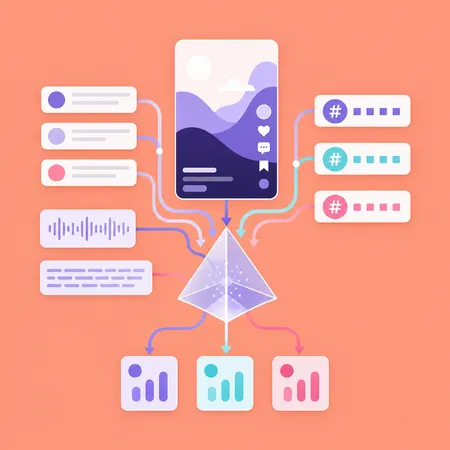
How to Track Brand Mentions on TikTok in 2026 (Tagged and Untagged): The Complete Guide
A step-by-step system for finding, monitoring and measuring every organic TikTok mention of your brand — including the untagged, spoken and on-screen references most tools miss.

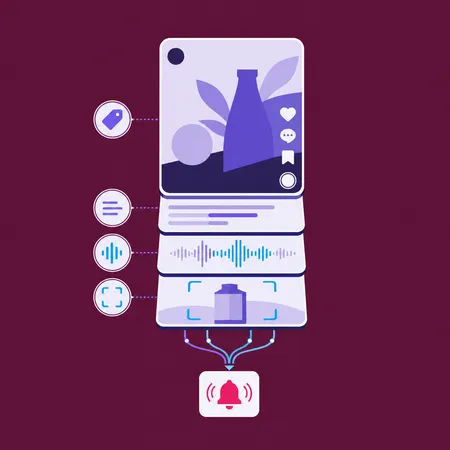
To track TikTok brand mentions in 2026, combine native tools with third-party video intelligence: use TikTok's Inbox "Mentions and tags" filter and TikTok One Content Suite for tagged and brand-relevant videos, then layer a listening tool to catch untagged, spoken, and on-screen references. Native notifications only surface videos that use your @handle, so real coverage means monitoring four mention layers - tags, caption and hashtag text, spoken words, and on-screen text or product visuals. Route what you find to a named owner with a defined response SLA so every meaningful mention becomes a decision, not just a data point..
Summary
- TikTok brand monitoring in 2026 has to cover four mention layers, not one: tags, caption and hashtag text, spoken words, and on-screen text or product visuals. A tag-only workflow catches the smallest, most polite slice of your conversation.
- Native TikTok notifications only surface mentions that use your @handle. TikTok lets you filter the Inbox by "Mentions and tags," but that never reaches videos where your brand is said out loud, shown on packaging, misspelled, or compared to a competitor.
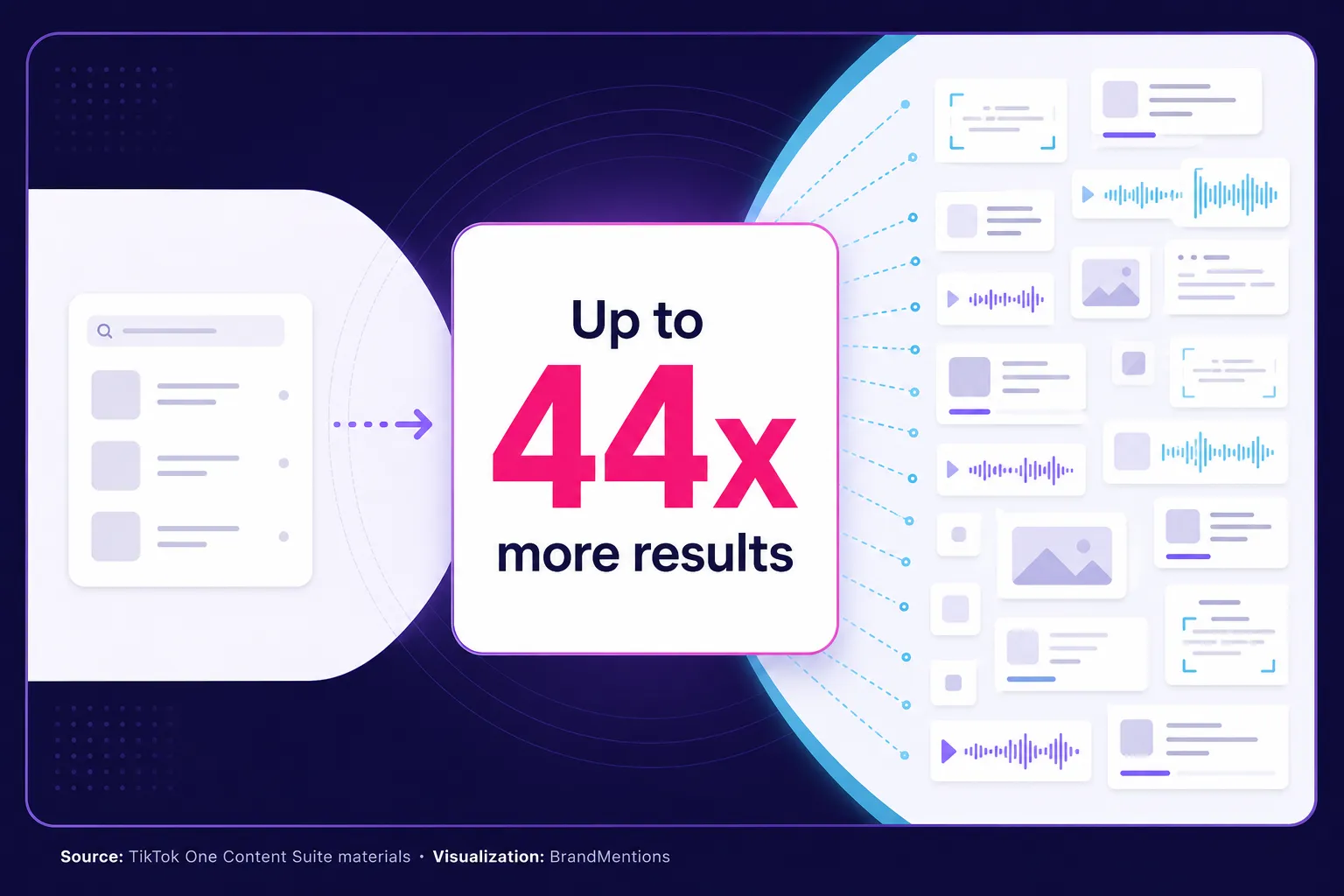
- TikTok's own Content Suite documentation says it finds brand-relevant videos using captions, hashtags, tagged Business Accounts, automatic speech recognition, and optical character recognition, and reports it surfaces up to 44 times more results than manual search.
- Response speed is now a monitored metric. The 2025 Sprout Social Index, based on 4,044 surveyed consumers, found that 73% of social users expect brands to respond within 24 hours.
- Share of voice is only meaningful against a fixed competitor set and a fixed source scope. Reported as a standalone mention count, it tells leadership nothing.
- TikTok mentions feed AI visibility indirectly. McKinsey found that only about 1% of sources cited by large language models for consumer brand queries came from brand-owned websites, which puts third-party TikTok conversation directly inside how answer engines describe you.
A stranger holds up your product, says your name in the first three seconds, compares you to a competitor, and never taps the @ button once. That video can move sales. It can shape what an AI assistant says about you next month. And most brand teams never see it.
This is the gap this guide closes. I have run monitoring programs where the mention number on the dashboard looked healthy while the real conversation, the untagged and spoken and shown one, was several times larger and pointing in a different direction. The job is not collecting every mention. The job is catching the few that signal a shift, then building a system that does it on repeat.
At a Glance: Core Tactics by Goal
- Best for zero budget and low volume: Native notifications plus saved manual searches. Free and immediate, and enough if your mention volume is small and mostly tagged.
- Best for finding high-value creator UGC: TikTok One Content Suite. Use it when your priority is discovering brand-relevant videos and turning approved ones into Spark Ads.
- Best for untagged text at operating speed: Keyword, hashtag, product, and competitor monitoring. Use it when customers name you in captions and comments without tagging you.
- Best for spoken and on-screen mentions: Video intelligence with speech-to-text and OCR. Use it when your product is shown, unboxed, demonstrated, or pronounced differently than it is written.
- Best for reputation risk and crisis speed: Sentiment scoring, volume-spike alerts, and defined response SLAs. Use it when one creator or one product complaint can move into press, Reddit, search, or AI answers.
- Best for feeding AI-answer visibility: Cross-channel tracking that spans TikTok, news, and the wider web, because answer engines cite third-party sources far more than your own site.
What Counts as a TikTok Brand Mention in 2026?
A TikTok brand mention is any reference to your brand on TikTok, tagged or untagged, appearing in a caption, hashtag, comment, spoken audio, on-screen text, or product visual, whether or not the creator links your account.
The definition most teams use is too narrow. TikTok is a video-first platform, and the reference often lives in the last place a text crawler reaches: the audio track and the frame.
The practical mention types are these:
- Tagged mentions: The creator uses your @handle or tags your Business Account.
- Caption and hashtag mentions: Your brand, product, slogan, or campaign appears as text, including misspellings.
- Comment mentions: Users discuss you under your video, a creator's video, a competitor's video, or a trend.
- Spoken mentions: Someone says your brand name in voiceover, live commentary, or a review.
- On-screen text mentions: Your name appears in overlays, subtitles, receipts, screenshots, or a comparison card.
- Shown mentions: Your product, logo, packaging, storefront, or app interface appears, even if nobody names you.
- Commercial mentions: Your brand appears in paid partnership content, affiliate posts, TikTok Shop content, or Spark Ads workflows.
- Second-order mentions: A TikTok gets embedded, summarized, reposted to Reels or Shorts, or covered by a publisher.
TikTok's own For You recommendation explanation names user interactions, captions, sounds, hashtags, language, country, and device as ranking signals, and notes that a strong signal like finishing a longer video can outweigh weaker ones. The comment section, the audio, and watch behavior can all move a brand conversation without the brand ever getting a notification.
The Mention Gap Rule: If your system only reads @tags and captions, you are not monitoring TikTok. You are monitoring the easiest text layer of it.
Treat a mention as an operational object, not a notification. Every one should carry a URL, creator, timestamp, source type, product, sentiment, risk score, response owner, and reporting tag.
How Is Tracking TikTok Different From Tracking X or Instagram?
The core difference is where the mention lives: on X or Instagram it sits in indexable text, but on TikTok it often lives in speech and image that a text-only monitor cannot read.
A creator can talk about your running shoes for ninety seconds, hold the box to the camera, and write a caption that says nothing about the brand. Every text-only monitor scores that as zero mentions. The conversation happened. The tool just could not hear it.
That is the reframe for 2026. A majority of U.S. TikTok users, 62% in Pew Research Center's 2024 study, said they use the app to find reviews or recommendations. Reviews and recommendations are spoken and shown formats. If your monitoring stops at text, you are measuring the smallest part of your presence.
Treat every untagged, spoken, or shown mention as the default state of a TikTok reference. The tagged @mention is the easy exception, not the norm to build your system around.
Can You Track Untagged Mentions Without TikTok's Official API?
Mostly yes - you do not need API access to run a strong program, because most third-party listening tools ingest publicly available TikTok content through their own integrations. Understanding why explains the whole tooling market.
TikTok's public pipes are deliberately narrow. The Commercial Content API is built for ad and commercial-content transparency, and its repository currently holds data from Europe only. The Research API is stronger for our purposes on paper. Its video query fields include video descriptions, hashtag names, usernames, engagement counts, a video mention list, and voice-to-text where available.
But the Research API is gated for approved academic and non-profit researchers, and it is not built for daily marketing operations. It is also imperfect: one published study found that the API failed to return metadata for roughly one in eight videos supplied through data donations. So official access is not a complete answer even for the people who have it.
The practical takeaway: you do not need API access to run a strong program. Most third-party listening platforms ingest publicly available TikTok content through their own integrations, then layer on sentiment, alerting, and reporting. What you need is a tool that already covers the TikTok source types you care about, and a workflow that turns what it finds into decisions.
How Do TikTok Mentions Influence AI Visibility?
TikTok mentions influence AI visibility indirectly: a video gets indexed, embedded, summarized, reshared, or covered by a publisher, and the claim inside it becomes part of the third-party evidence set that answer engines cite. A TikTok video does not become a cited AI answer just because it went viral.
The path is indirect. The video gets indexed, embedded, summarized, reshared, covered by a publisher, or discussed in a forum, and the claim inside it becomes part of a broader evidence set. Google's AI features documentation says AI Overviews and AI Mode can use query fan-out, issuing multiple related searches across subtopics and data sources. A question like "is this skincare brand good for sensitive skin" fans out into reviews, complaints, ingredients, and comparisons, and third-party sources answer most of them.
This is where it gets commercially serious. According to McKinsey's State of the Consumer research, only about 1% of sources cited by large language models for consumer brand queries came from brand-owned websites. The rest came from third-party reviews, editorial, and social. Your untagged TikTok reviews are exactly that layer.
So TikTok mention tracking is no longer just PR hygiene. It is an input into your AI visibility work. The claim circulating in a TikTok review today is the sentence an answer engine may repeat tomorrow, which is why social and search teams should read from the same evidence trail instead of filing separate reports.
The TikTok Mention Coverage Matrix
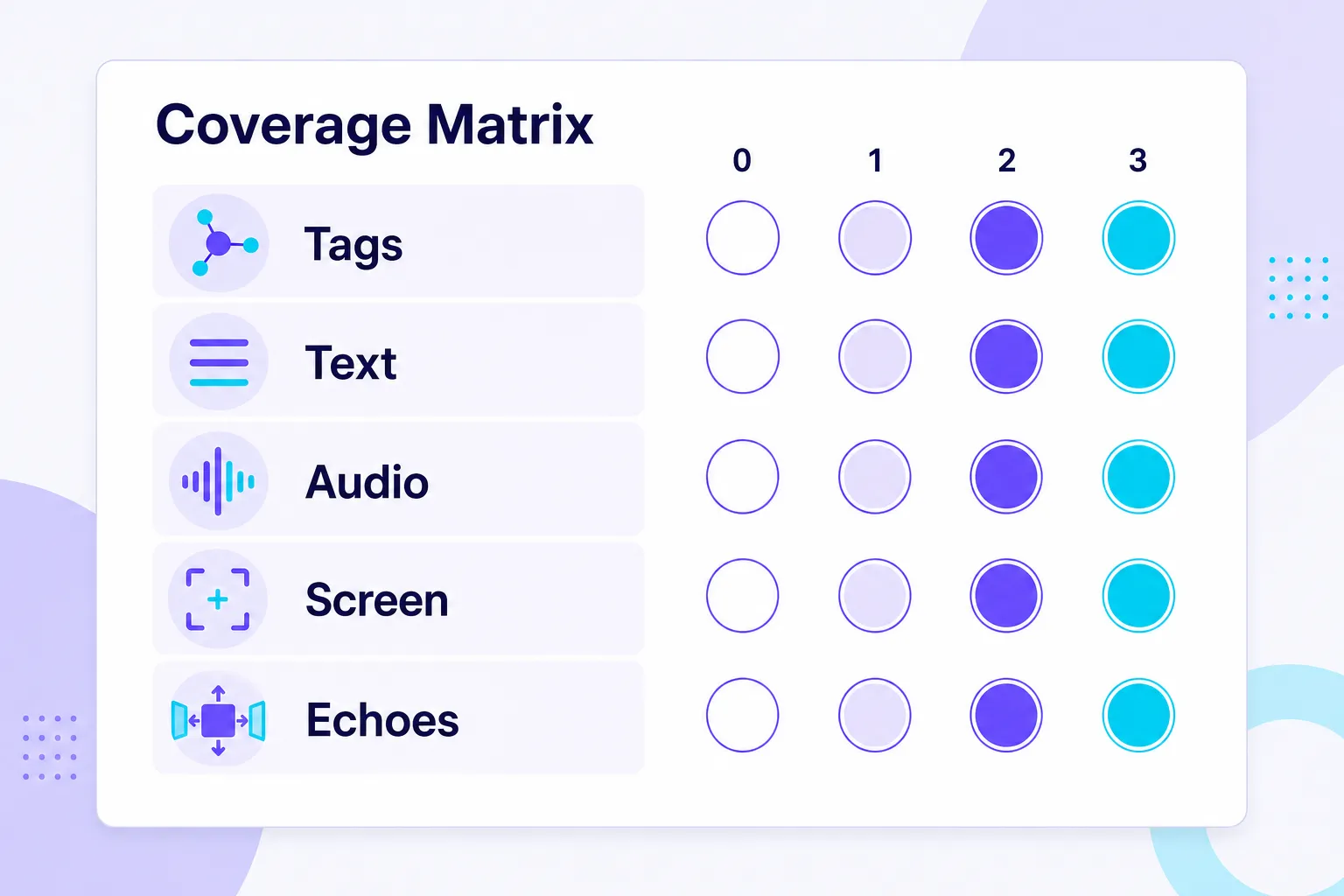
Before you choose a tool, score where your mentions leak. Most brands do not have a monitoring problem. They have a blind spot they cannot see, and they overrate their own coverage.
Score each layer from 0 to 3. 0 means not tracked, 1 means checked manually, 2 means tracked with alerts but light review, 3 means tracked, routed, classified, measured, and audited.
| Mention layer | What it catches | Typical owner | Score (0-3) |
|---|---|---|---|
| @mentions and tags | Direct tags of your handle or Business Account | Social manager | |
| Captions and descriptions | Brand, product, slogan, campaign text | Social or PR | |
| Hashtags | Branded, campaign, product, misspelled hashtags | Social | |
| Comments | Questions, complaints, comparisons, jokes | Community or support | |
| Spoken words | Voiceover reviews, unboxings, reactions | Listening or creator team | |
| On-screen text | Overlays, receipts, screenshots, subtitles | Listening | |
| Product or logo shown | Packaging, app UI, shelf, clothing, label | Brand safety or creator team | |
| TikTok Shop or affiliate | Product-linked, commission-driven content | Commerce or affiliate team | |
| Paid partnership content | Disclosures, sponsor labels, ad-library visibility | Paid social or compliance | |
| Cross-channel echoes | News, web, forums, Reddit, YouTube, AI answers | PR, search, reputation |
How to read your score out of 30:
- 0 to 10: You are mostly reacting. Start with native notifications and a real keyword map.
- 11 to 20: Partial coverage. Add alert routing, sentiment review, and competitor terms.
- 21 to 25: A working program. Improve speech, OCR, and cross-channel measurement.
- 26 to 30: Close to enterprise-grade. Audit false negatives and response outcomes monthly.
The score matters because it makes hidden work visible. A team can produce a polished monthly report and still sit at 12 out of 30 because nobody watches spoken mentions, comment threads, or cross-channel echoes. In my experience, most teams believe they are at 25 and are living at 10.
How to Track TikTok Brand Mentions: Step-by-Step
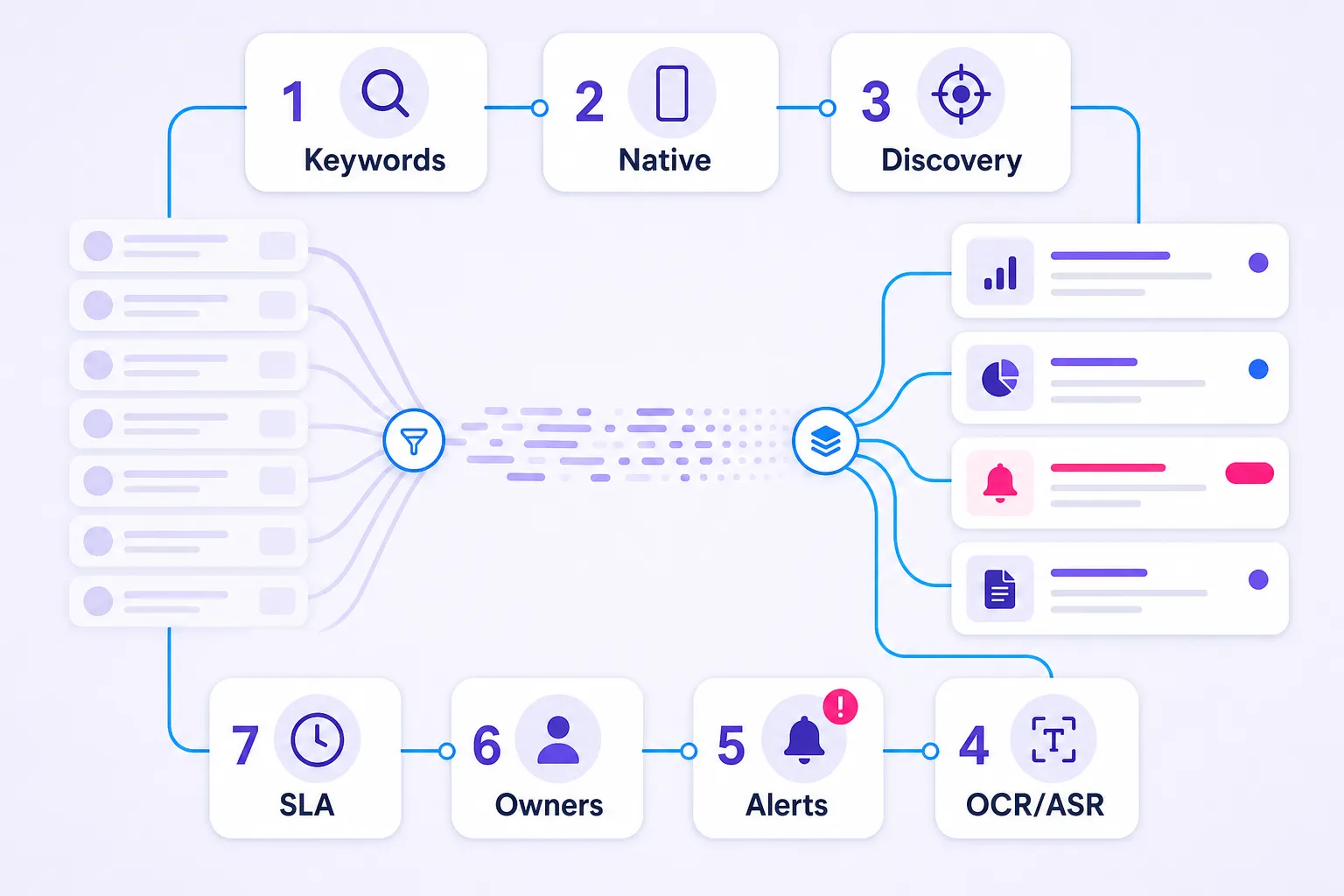
To track TikTok mentions effectively, define your keyword tiers, turn on native alerts, add TikTok One Content Suite for native discovery, connect a third-party OCR/ASR listening tool, build layered alerts, route each mention to an owner, and set response SLAs. Use this ordered checklist to stand up a working monitoring system before you dive into the individual methods below. Each step maps to a method section that explains it in depth.
- Define your keyword tiers. Map tier one (exact brand name, @handle, owned hashtags), tier two (product lines, campaign terms, founder or spokesperson names, common misspellings), and tier three (category and competitor comparison language, purchase-intent phrases, and support phrases like "refund," "broken," and "scam"). Add pronunciation variants and exclusion terms if you sell in more than one market.
- Turn on native alerts. In the TikTok app, open Inbox, tap Activities, then All activity, then filter by "Mentions and tags." Review tagged videos and comments daily, and enable push notifications only if your volume is low enough for real-time review.
- Add native discovery with TikTok One Content Suite. Use its caption, hashtag, ASR, and OCR search to surface brand-relevant organic videos that plain search and tag notifications miss.
- Connect a third-party OCR/ASR listening tool. Choose a cross-channel tool that scans captions, comments, and hashtags automatically and applies speech-to-text and OCR to catch spoken and on-screen references. Validate its TikTok source coverage against your own audit first.
- Build layered alerts and set sentiment thresholds. Configure real-time, hourly, daily, and weekly alerting, and define the sentiment threshold that means "urgent" for your brand as a percentage change against your own baseline.
- Establish routing rules by owner. Send each mention type to the team that can act on it - PR, community, support, commerce, or legal - so a 200-follower complaint and a 200,000-follower safety claim never share a queue.
- Set response SLAs and a review cadence. Tier your response targets under the 24-hour ceiling, run a monthly sentiment QA sample, and audit false negatives so the system improves on repeat.
Method 1: Native Tagged Mentions and TikTok One Content Suite
Start here because it is free and instant.
TikTok's notification support page explains that you can filter Inbox activity by going to Inbox, Activities, All activity, then "Mentions and tags." Review those tagged videos and comments daily, and turn on push notifications only if your volume is low enough for real-time review.
For TikTok-native discovery beyond tags, the strongest native asset is TikTok One Content Suite. Its documentation says it searches organic videos for brand names and keywords and captures relevance through captions, tagged Business Accounts, hashtags, voiceover via automatic speech recognition, and text within video via optical character recognition. TikTok's own Content Suite materials report it surfaces up to 44 times more results than manual search, can be 10 times more efficient than managing creator partnerships offline, and offers more than 15 filters including brand safety, creator eligibility, and sentiment.
The non-obvious insight: Content Suite is sold as an ads tool, but it doubles as the cheapest native untagged-discovery engine TikTok will hand you directly, because its ASR and OCR reach spoken and on-screen references that plain search misses. Use it for discovery even if you never boost a single Spark Ad.
The execution limit: Content Suite is built for ad activation, so it leans toward ad-eligible content and does not give you cross-channel reputation context, competitor share of voice, or a full crisis workflow. It is strongest for TikTok-native UGC discovery and Spark Ads. It is not a reputation-monitoring system, and it will not alert you at 2 a.m. when a complaint starts to spread.
If your only tracking method is native notifications, you are not measuring your TikTok presence. You are measuring the small, polite subset of it that remembered to tag you.
Method 2: Untagged Text via Keyword and Hashtag Monitoring
This is the workhorse layer, and it starts the moment you stop searching only your exact brand name.
Build a keyword map in tiers. Tier one is your non-negotiable core: exact brand name, @handle, and owned hashtags. Tier two is product lines, campaign terms, founder or spokesperson names, and common misspellings. Tier three is category and competitor comparison language: "dupe for X," "better than X," "alternative to X," plus purchase-intent phrases like "worth it" and "before you buy" and support phrases like "refund," "broken," and "scam."
Keep branded hashtags separate from organic ones, because official hashtags show campaign adoption while organic hashtags show how your audience actually speaks. This is where monitoring hashtags as a distinct query type pays off, since branded and campaign tags carry your highest-intent conversation.
The non-obvious insight: The mentions that decide purchases rarely use your exact brand name. They use your category plus a complaint or a comparison. Add competitor names and category phrases to your queries, not just your own name, or you will miss the conversations that are actually moving buyers.
The multilingual gap most teams ignore: If you sell in more than one market, add pronunciation variants, transliterations, non-English captions, and regional slang to your map. Brand names that sound like generic words create constant false positives, so build exclusion terms for the unrelated meanings early.
The execution limit: Text listening reads words. It cannot hear a spoken brand name or see a logo in a frame. And TikTok search is a discovery interface, not a compliance archive. Results shift by account, location, and time, so the moment a mention might become evidence, save the URL, creator, date, transcript, and a screenshot immediately.
Method 3: Spoken and On-Screen Mentions via Video Intelligence
This is the layer thin guides skip, and it is where the real coverage gap closes.
"Untagged" is not one problem. It is three. The creator typed the brand but did not tag you. The creator said the brand but did not type it. Or the creator showed the brand and never said or typed it. Each needs different detection.
For spoken mentions, the system transcribes the audio track and scans the transcript for your brand name and product names. Test it against your brand's real pronunciations, acronyms, creator slang, regional accents, fast speech, and audio buried under trending music. Pull twenty videos where you know the brand is said aloud, then measure how many the system finds. That gives you a false-negative rate you can actually improve.
For on-screen text, OCR catches overlays, subtitles, receipts, comparison cards, packaging labels, and app screens. It is especially strong for skincare routines, food packaging, apparel hauls, software screen recordings, and "things I bought" lists.
For product-only or logo-only appearances, do not assume any tool covers this. Ask the vendor directly whether it supports logo detection, product recognition, and packaging detection on TikTok video. If it does not, build a manual review process around priority creators, TikTok Shop affiliate content, and high-volume product communities.
The measurement framing that survives a CFO conversation: report incremental coverage. Run text-only for a week, then add audio and visual, and report the percentage lift in mentions found. That single number justifies the layer better than any feature list.
The non-obvious insight: On TikTok, "shown" is often more commercially valuable than "said." A product on a bathroom shelf, a gym bag, or a kitchen counter influences buying behavior even when nobody names it, because it reads as genuine use rather than a paid callout.
How Do You Set Up TikTok Mention Alerts Without Creating Noise?
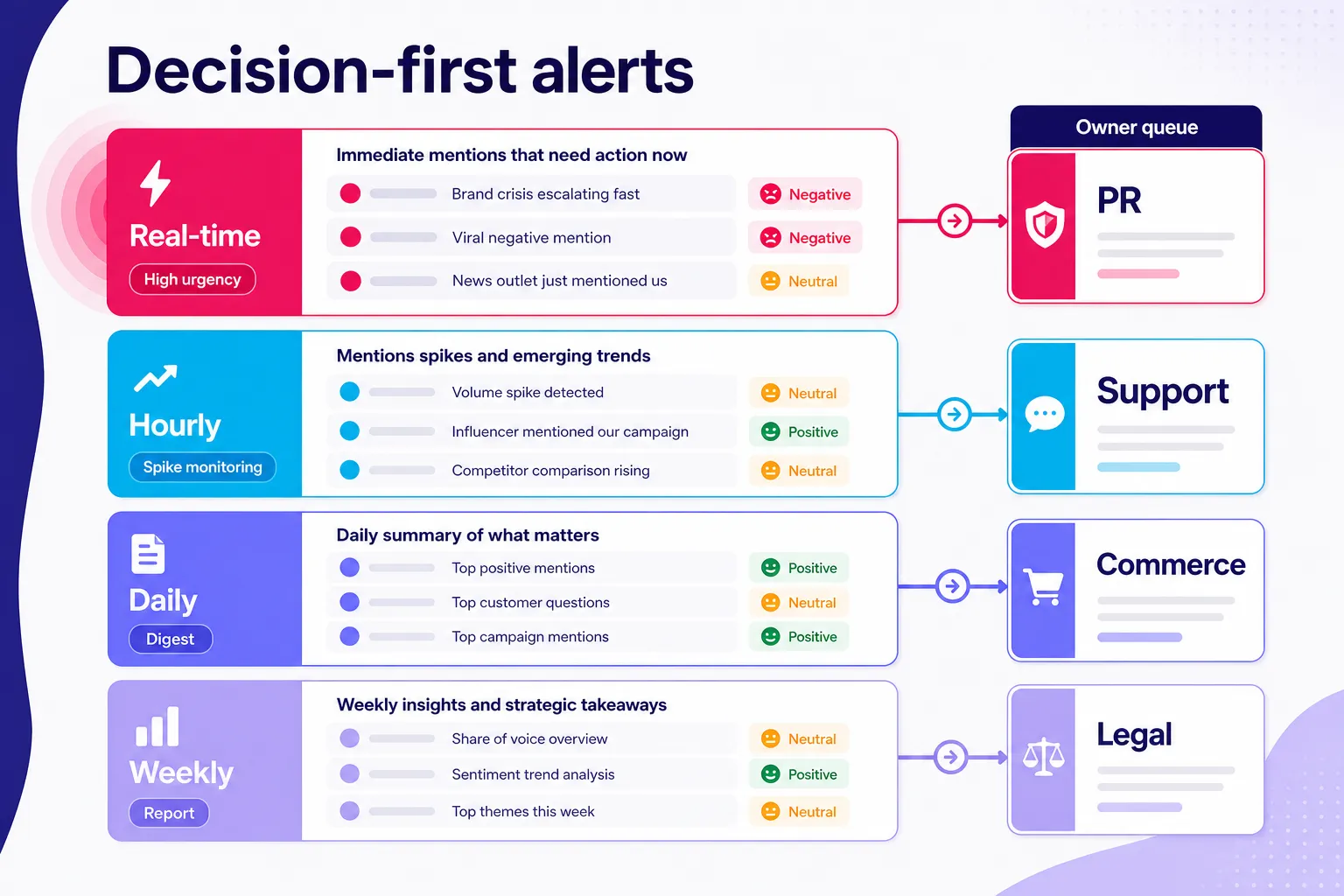
Build alerting in four tiers - real-time, hourly, daily, and weekly - and route each mention by owner, so only decision-worthy events interrupt the team. The tool matters less than the query design and the restraint on alerts. An alert that fires on every mention trains your team to ignore alerts.
The Decision-First Alert Test: If you cannot name the decision an alert will trigger, do not create it.
Build alerting in four layers. Real-time alerts fire on high-risk negative mentions: safety, legal, counterfeit, discrimination, boycott, or a high-reach creator. Hourly alerts fire on sudden volume spikes or a competitor-comparison surge. A daily digest carries normal positive, neutral, and low-risk negative mentions. A weekly report carries share of voice, sentiment mix, UGC candidates, and product-feedback themes.
Route by owner, not by keyword alone. PR should not receive every support complaint. Customer care should not receive every licensing opportunity. A complaint from a 200-follower account and a product-safety claim from a 200,000-follower account should never land in the same queue.
This is the natural point for a cross-channel tool, because a TikTok issue rarely stays on TikTok. BrandMentions fits the specific niche of cross-channel mention alerting that keeps TikTok, news, forums, and the wider web in one reporting view, which matters when a flare-up spills into press or Reddit and you want it in one feed instead of five dashboards. You configure a project with your brand name and keyword tiers, set the sentiment threshold that defines "urgent" for you, and route real-time mention alerts to the owner who can act. Validate its TikTok source coverage against your own audit before you rely on it, and treat spoken-audio and logo-only detection as a separate capability to confirm with any vendor.
The point of an alert is not to know about a mention. It is to shorten the distance between a mention and a decision. If it does not do that, mute it.
Sentiment Scoring, Spam Filtering, and QA
Volume alone lies. High reach with negative sentiment is a red flag, not a win.
Use sentiment scoring as a triage layer, not a final verdict. TikTok language is messy: sarcasm, irony, memes, and creator persona confuse automated models. "This is criminally good" scores negative on a weak model, and "I hate how much I love this" confuses it entirely. Classify each mention into five buckets: positive, neutral, negative, risk (safety, legal, fraud, health), and ambiguous.
The number to watch is not total mentions. It is the trend line of negative-sentiment share. A stable 10% negative that jumps to 30% in a day is your earliest crisis signal, usually visible before the volume spike. Set your threshold as a percentage change against your own baseline, not a fixed industry number, so it works whether you get 50 mentions a day or 5,000.
A defensible sentiment QA method, not just spot checks: each month, pull a fixed sample of 30 to 50 classified mentions and have a second reviewer re-score them. Track the disagreement rate, keep a running slang dictionary for your category, and recalibrate the model after a run of errors. Weekly review of the negative and ambiguous buckets in the first month teaches the tool your category's language faster than you expect.
Filter spam aggressively. Exclude job postings, giveaway spam, coupon scams, bot comments, engagement pods, unrelated meanings of your brand name, and affiliate spam that repeats the same caption across accounts. Remove your own brand's replies from the count. A clean 200 mentions beats a dirty 2,000 every time, because false positives do not just annoy you, they bury the five mentions that matter.
From Mentions to Action: Response, UGC Reuse, and Crisis
Capture is worthless without a workflow. Every meaningful mention should enter one of five paths: respond, escalate, reuse, learn, or archive.
Response SLAs by priority. The 2025 Sprout Social Index, based on 4,044 surveyed consumers, found 73% expect a brand response within 24 hours. Use that as your ceiling, then tier under it.
| Priority | Example mention | First action | Public response target |
|---|---|---|---|
| P0 | Safety, legal, counterfeit, discrimination, viral boycott | Verify facts, open crisis thread | Holding response within 2 hours if verified |
| P1 | High-reach negative review, creator complaint, journalist | Review video, comments, contact history | Same business day |
| P2 | Support complaint, shipping or refund issue | Ask for order details or move to support | Within 24 hours |
| P3 | Positive UGC, praise, tutorial, unboxing | Thank creator, assess reuse rights | Within 48 hours |
| P4 | Neutral, low-risk discussion | Log and classify | No response required |
The 24-Hour Response Ceiling: If a public mention needs a brand response, either answer it or take ownership of it within 24 hours. After that, the silence becomes part of the story.
When not to reply. Replying is not always the safe move. A public reply to a low-reach troll can boost the video's algorithmic reach. A genuine customer issue often belongs in a DM, not a comment thread. A legal or safety allegation sometimes needs legal review before any public word. Have a documented approach for handling negative mentions so the response is consistent, and accept that silence is occasionally the correct call.
UGC reuse needs permission, not a screenshot. TikTok's Spark Ads workflow lets you run an authorized organic post as an ad, and engagement from boosting is attributed to the original post. Beyond Spark Ads, get written permission that names the scope: organic repost, paid ad, website embed, email, retail page, territory, duration, allowed edits, and music rights. Store the approval and expiration date. Then feed approved content into a bank of UGC reuse ideas for paid social, product pages, and support answers. Keep a disclosure check in the flow, because the FTC's Endorsement Guides, revised in 2023, turn on whether the audience understands the reviewer's relationship to the brand.
Separate your monitoring queues by content type. Organic mentions, TikTok Shop affiliate content, branded content, and paid partnership posts carry different disclosure, access, and measurement rules. Affiliate and counterfeit claims are high-risk for commerce brands and deserve their own queue, not a blended "mentions" feed.
A crisis is not any negative mention. It is a mention with spread risk. Watch five signals: volume above baseline, velocity your team cannot keep up with, an authoritative voice involved (journalist, expert, regulator), severity (safety, law, money, minors), and portability to news or search. When three are true, open a crisis review. Build your crisis response planning before the crisis exists, because the wrong time to design the workflow is when a creator has already posted part two. And watch the comment section: a moderate-view video can turn into the crisis when customers pile on with the same complaint.
The most dangerous TikTok mention is rarely the loudest video. It is the quiet one gathering identical complaints in its comments before anyone on your side is watching.
Compliance, Data Access, and the 2026 Regulatory Context
This is the section most guides skip, and it is the one procurement and legal will ask about first.
Public-data monitoring still carries obligations. Vendors collect publicly available TikTok content, but you remain responsible for how you handle it: honoring user deletion, respecting data retention limits, avoiding collection on minors and sensitive categories, and staying inside platform terms and regional data rules. Ask any vendor to document their lawful basis and their retention and deletion policy in writing.
The ownership picture also changed. Following the 2025 to 2026 restructuring, U.S. TikTok operations run through a domestic joint venture with national-security oversight and stricter data-governance requirements. For U.S. marketers, that affects data residency, enterprise procurement, and vendor risk review. Confirm where your monitoring vendor stores and processes TikTok data, and route the answer through your security team before you sign.
The practical rule: treat TikTok monitoring as a governed data process, not a marketing convenience. If you cannot explain where the data lives, how long you keep it, and how you delete it on request, you are not ready to scale the program.
Measuring Share of Voice and Earned Media Value
Executives do not want a list of TikToks. They want to know whether the conversation is moving in the right direction against competitors.
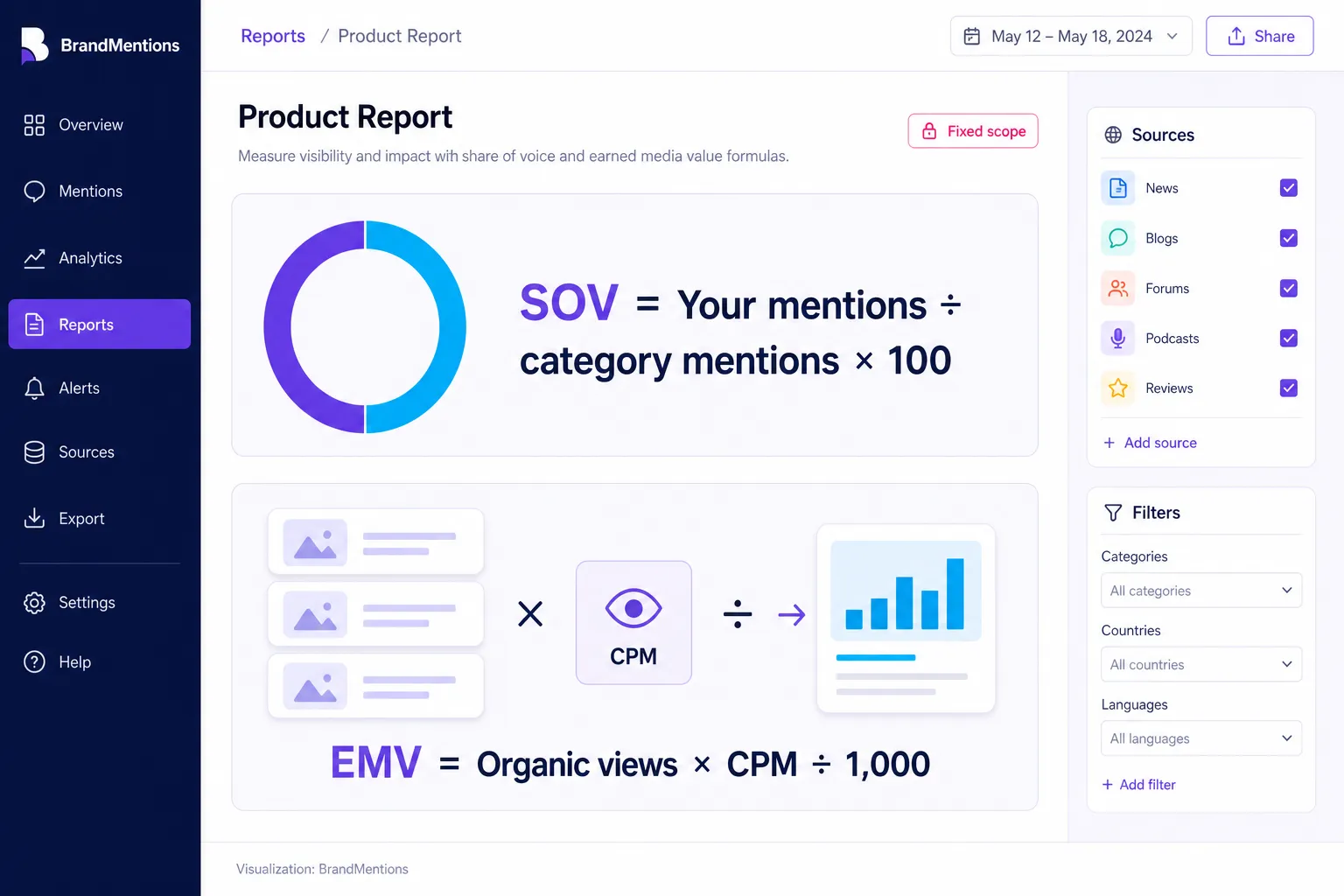
What is Share of Voice? It is your share of category conversation against a defined competitor set: your relevant TikTok mentions divided by total relevant mentions for your brand plus competitors, times 100.
Report more than one version. Mention SOV counts posts. Engagement-weighted SOV counts reach that traveled. A brand can have low mention SOV but high engagement SOV, meaning fewer people talk about it but the talk spreads further. It can also have high mention SOV and high negative SOV, meaning it is getting louder for the wrong reason.
The Denominator Rule: Share of voice is only useful when the competitor set, source scope, keyword logic, and date range stay fixed. Change any one of them mid-series and the trend line becomes fiction.
The signal worth watching is Excess Share of Voice: your SOV minus your share of market. A positive gap tends to precede growth. A negative gap warns that a competitor is out-talking you before it shows up in sales. Pair this with your broader work on measuring brand awareness, because awareness and SOV move together.
For governance, lean on established frameworks. The AMEC evaluation taxonomy lists share of voice, tone, sentiment, reach, impressions, and trust as valid communication metrics, and the MRC social media measurement guidelines matter because TikTok reports mix views, impressions, engagement, and modeled reach. Keep your metric definitions stable across periods.
What is Earned Media Value? It is a modeled estimate of the ad spend equivalent of your organic exposure. It is not revenue.
Use a conservative formula anchored to your own numbers:
Modeled TikTok EMV = organic views from relevant mentions × your average TikTok paid CPM ÷ 1,000.
Use your own ad account's CPM, not a platform-wide figure you cannot verify. Show adjusted versions only if you can defend them: sentiment-adjusted (discount negative views), engagement-adjusted (weight by engagement rate), or commerce-adjusted (separate TikTok Shop content from awareness content). Report EMV as a directional trend, never as sales.
Deduplicate before you report anything. Stitches, duets, reposts, embedded TikToks, and the same clip re-uploaded to Reels or YouTube Shorts inflate counts fast. A news article about a TikTok is a separate mention from the TikTok itself. Set a dedup rule on URL and near-duplicate video so a single viral moment does not read as fifty conversations.
Choosing a TikTok Mention Tracking Tool: Checklist & Comparison
Before you sign anything, make every vendor prove the same things. Ask each one to demonstrate, on your real brand terms, these ten items:
- Which TikTok source types they cover (captions, comments, hashtags, spoken audio, on-screen text, product or logo visuals).
- Refresh cadence and latency from post to appearance in your feed.
- Whether they support speech-to-text and OCR on TikTok, and their false-negative rate on a sample you provide.
- Historical lookback available at your plan tier.
- Region and language coverage.
- Export rights and data portability.
- Alert destinations (Slack, Teams, email, webhook) and routing by owner.
- Sentiment accuracy on 50 of your own past mentions.
- Data retention, deletion, and lawful-basis documentation.
- Cross-channel coverage for news, web, forums, and AI-answer sources.
BrandMentions vs Content Suite, the core difference in execution: TikTok One Content Suite is strongest when the job is discovering brand-relevant creator content inside TikTok and turning it into ads. A cross-channel tool is stronger when the job is watching TikTok next to news, forums, and web mentions, tracking competitor share of voice, and feeding AI-visibility context. If TikTok is a real channel for you, run both.
| Method or tool type | Best fit | Catches well | Misses | Time to value | Resource need |
|---|---|---|---|---|---|
| Native notifications | Small brands, tagged response | @mentions, tags, replies | Spoken, on-screen, untagged, comments elsewhere | Same day | Low |
| Manual TikTok search | Early research, spot checks | Exact keywords, hashtags, obvious reviews | Personalization gaps, history gaps, scale | Same day | Medium |
| TikTok One Content Suite | UGC discovery, Spark Ads | Brand-relevant videos via caption, ASR, OCR, sentiment filters | Cross-channel context, competitor SOV, full crisis flow | Days to weeks | Medium |
| Cross-channel listening (incl. BrandMentions) | TikTok alerting with web, news, and AI-visibility context | Captions, comments, hashtags, sentiment, alerts, SOV, adjacent web and news | Pure speech or logo-only detection, confirm per vendor | Days | Medium |
| Enterprise listening suite | Large, regulated, global teams | Multi-region governance, large query sets, video intelligence | Setup time, training, procurement | Weeks to months | High |
| TikTok Research API | Approved research projects | Structured query fields, hashtags, voice-to-text where available | Not built for marketing operations | Weeks | Technical |
Frequently Asked Questions
How do I find TikTok mentions that don't tag my brand?
Search your brand name, product names, misspellings, hashtags, and competitor comparison phrases directly in TikTok's Discover tab, and save each search to rerun it. For continuous coverage, use a monitoring workflow that scans captions, comments, and hashtags automatically. To catch spoken or on-screen references, you need a system with speech-to-text and OCR, because native notifications only surface mentions that use your @handle.
Is there a free way to track TikTok mentions?
Yes. TikTok's own tools cover tagged and brand-relevant videos at no cost: use the Inbox "Mentions and tags" filter for tagged activity, and TikTok One Content Suite to discover brand-relevant organic videos. In the app, open Inbox, tap Activities, then All activity, then filter by "Mentions and tags" to review tagged videos and comments daily. For untagged discovery, TikTok One Content Suite searches organic videos using captions, hashtags, tagged Business Accounts, automatic speech recognition, and optical character recognition. The limit of the free route is that it stays inside TikTok - it will not give you cross-channel reputation context, competitor share of voice, or a full crisis workflow, and it will not reliably catch logo-only appearances or mentions echoed on news, forums, and the wider web.
Can TikTok itself track untagged brand mentions?
Only partly. TikTok's Inbox filter for "Mentions and tags" covers tagged activity, and TikTok One Content Suite surfaces brand-relevant organic videos for advertisers using captions, ASR, and OCR. But TikTok's built-in analytics track activity on your own content, so untagged mentions, competitor comparisons, and cross-channel conversation still need a third-party workflow.
How do I calculate Earned Media Value for a TikTok mention?
Multiply the organic views from relevant mentions by your own average TikTok paid CPM, then divide by 1,000. Use your ad account's real CPM rather than a platform-wide estimate, weight by engagement or sentiment if you can defend it, and report the result as a directional trend, never as revenue.
Do I need TikTok's official API to monitor mentions?
No. The Commercial Content API is built for ad transparency with EU-only data, and the Research API is gated for approved researchers, not marketing teams. Most third-party tools collect publicly available TikTok data through their own integrations, which is enough for text-based mention detection for the vast majority of brands.
What is the difference between tagged and untagged TikTok mentions?
A tagged mention links your @handle or Business Account and triggers a native notification; an untagged mention names, says, or shows your brand without linking your account, so it never notifies you. Untagged mentions split into three types - the brand typed but not tagged, the brand said aloud but not typed, and the brand shown on screen but neither said nor typed - and each needs a different detection method: text listening for the first, speech-to-text for the second, and OCR or visual recognition for the third.
How fast should a brand respond to a TikTok mention?
Within 24 hours as a ceiling, then tiered under it by priority. The 2025 Sprout Social Index, based on 4,044 surveyed consumers, found 73% expect a brand response within 24 hours. In practice, verified P0 safety or legal issues warrant a holding response within 2 hours, high-reach negative reviews the same business day, support complaints within 24 hours, and positive UGC within 48 hours.
Conclusion: Build the System, Not the Scrapbook
The brands that win on TikTok in 2026 are not the ones with the most mentions. They are the ones that hear the mentions everyone else misses and turn them into a decision fast enough to matter.
That is the shift worth internalizing. TikTok stopped being a caption platform and became a video-search and review engine, which moved the center of your brand conversation from text you can index to audio and frames you have to listen for. A tag-only workflow was never complete. Now it is barely a starting point, and the same untagged conversation increasingly feeds how answer engines describe you.
Your next step is small and concrete. Score yourself on the Coverage Matrix, find the layer you actually run today, and add exactly one layer above it this quarter. If you are on native notifications, add text listening. If you are on text listening, add speech and on-screen capture. Run a one-week audit that compares your notification feed against a tool trial, and the delta is your blind spot, quantified. Build the ladder one rung at a time, route every alert to a named decision, and let the system, not your scroll habit, catch the mention that changes what happens next.
Filed under: Social Media Monitoring