How to Turn Competitors’ Unhappy Customers Into Warm Leads: The 2026 Playbook
A complete 2026 system for finding, qualifying, and ethically converting a competitor's dissatisfied customers into warm pipeline—covering sourcing channels, scoring, compliance, and email sequences.

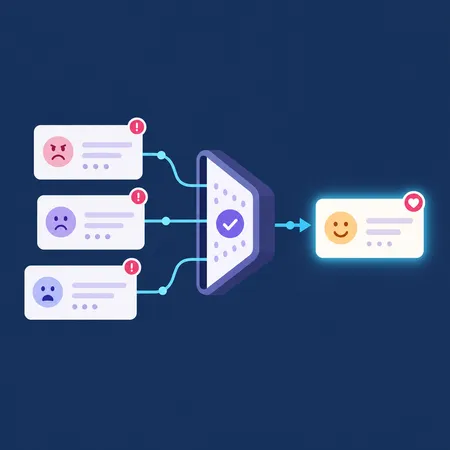
Most B2B companies spend thousands trying to find prospects who might be interested. Meanwhile, their competitors already have customers publicly explaining exactly why they're ready to leave. Those complaints are some of the highest-intent buying signals on the internet, if you know how to find them and approach them ethically.
Competitor dissatisfaction lead generation is the practice of finding public signals that a rival's customer is unhappy - negative reviews, social complaints, forum posts, or "why we left" write-ups - qualifying whether that account fits your ideal customer profile, and then reaching out with a relevant, ethical alternative timed to the moment they are most likely to switch. The core process is a four-step loop: listen for the specific, dated, public complaint; score it for account fit, pain, and freshness before sales sees it; reach out fast with the problem (not the pitch) at the center; then measure pipeline per signal type. Executed with a documented lawful basis and genuine empathy, it produces fewer but warmer conversations than ordinary cold outbound.
Summary
- A competitor complaint is not "negative sentiment." It is a public buying-risk signal. A working paper hosted on SSRN found that seeing a negative review of three stars or less cut purchase probability by 51.4% and increased continued search for alternatives by 11.4%. (SSRN)
- The best review targets are rarely the one-star meltdowns. The convertible band sits roughly between 2.5 and 3.5 stars, with the tightest working range around 2.8 to 3.3, according to review-lead analysis. (IB Lead)
- Cold email benchmarks in 2026 swing wildly depending on how you count. Instantly reports a 3.43% average reply rate and past 10% for elite senders, while Belkins reports 0.45% using a stricter replies-divided-by-total-sends method. Define your denominator before you quote a number. (Instantly)
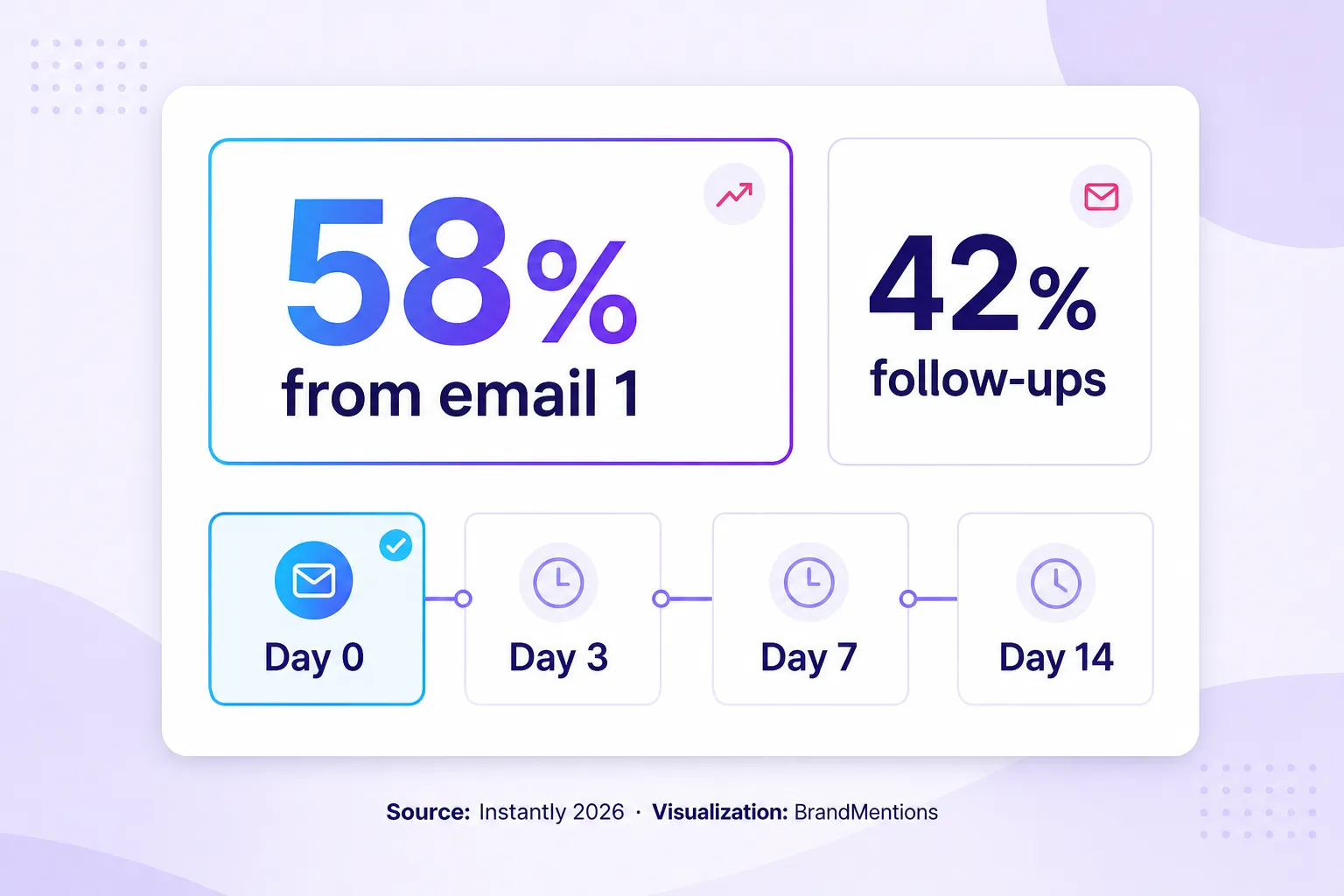
- The first email carries most of the load. Instantly's 2026 data shows 58% of replies come from step one and 42% from follow-ups, which justifies a 4-to-7 email sequence only when every touch adds new context. (Instantly)
- Compliance is now part of deliverability. Gmail requires senders above 5,000 daily messages to authenticate with SPF, DKIM, and DMARC, keep spam complaint rates below 0.30%, and support one-click unsubscribe on marketing mail. (Google)
- Cold B2B email is legal in the US, UK, and most of the EU when executed correctly, but the rules differ by country, and Germany is stricter than France or the UK.
Competitor Lead Generation Framework: Tactics by Goal
| Your goal | Best tactic | Why it wins |
|---|---|---|
| Fast ROI on a zero budget | Review marketplace mining (G2, Capterra, Trustpilot) | The pain is already written in the customer's own words, dated, and often tied to a named company. You can start today with a spreadsheet. |
| Real-time timing | Social and forum listening for untagged complaints | This is where the freshest, most candid frustration lives, hours or days before it ever reaches a review site. |
| Enterprise and high-ACV accounts | Account-level complaint clustering | Track repeated complaints from the same company, department, or product line before routing anything to sales. |
| Understanding buyer objections | Reddit and community listening | Weaker for direct contact because posters are often anonymous, but the best source of the exact language buyers use when no vendor is in the room. |
| Legal risk control | Public-data-only sourcing with documented lawful basis | Suppression lists and immediate opt-out handling. Boring, and the reason the program survives its first audit. |
Why Competitors' Unhappy Customers Convert Better Than Cold Leads
Competitor churn creates warmer demand because the prospect has already chosen the category, spent the budget, and felt the cost of a bad fit - so you skip the education step that stalls ordinary cold outbound. Standard outbound starts from a firmographic guess: right size, right market, might have the problem. Competitor dissatisfaction starts one step later.
That changes the conversation. A generic email asks, "Do you have this problem?" A complaint-triggered email asks, "Is this still a problem, and is it worth fixing before your renewal?" The second question respects the buyer's actual timeline, which is why it lands warmer.
The Complaint Is the Brief.
A good complaint hands you the use case, the failed promise, the emotional cost, and the exact language the buyer uses internally. You are not persuading a stranger that your category matters. You are entering a conversation the buyer already started.
The economics reward the discipline. Displaced customers made an active, deliberate choice rather than defaulting to inertia, so they tend to onboard with clearer success criteria and churn less. You spend less time educating and more time closing.
Competitor Churn vs. Buying Intent Data: What's the Difference?
Most intent data tells you a company is statistically in-market. Churn mining tells you a specific person is actually frustrated, right now, in their own words. That difference matters more than intent vendors admit.
| Dimension | Account-level intent data | Competitor churn signal |
|---|---|---|
| Unit of signal | The account | A specific, named person |
| How it's derived | Inferred, often arrives late | Directly stated and dated |
| What it tells you | An account is "surging" | Who, why, and at what stage |
| Evidence attached | A score | A name, a timestamp, and a quote |
| Best use | Prioritizing your list | The actual outreach |
Account-level intent answers "who might be in-market?" A churn signal answers "who just told the internet they are done with their current vendor?" Only one of those comes with a sentence you can quote back.
The practical model is to use both: account-level intent for prioritizing your list, contact-level churn signals for the actual outreach. And remember that the loudest complainer is frequently not the economic buyer. Log the signal at account level first, then map to the person who owns the budget.
Is It Legal and Ethical to Prospect a Competitor's Unhappy Customers?
Short answer: yes on both counts, if you show up to help rather than to gloat. The ethics and the law point the same direction here.
Ethically, the line is intent. You are contacting someone who publicly signaled a problem you can solve. If you arrive to solve it, you are useful. If you arrive to mock their vendor or exploit a business in distress, that shows, and it costs you the deal.
Legally, cold B2B email is permitted in every major jurisdiction when done correctly, but "correctly" is jurisdiction-specific, and I cover the operational detail in the guardrails section below. The one thing to internalize now is that relevance is your legal defense as much as your copy strategy. Volume-heavy, low-relevance blasting is what regulators and spam filters were built to stop.
The Forwarding Test.
Before any message goes out, ask one question: if the prospect forwarded this email to the competitor you are displacing, would you still be comfortable with it? If not, rewrite it. That single test removes almost everything predatory from a displacement program.
If your workflow needs 5,000 weak complaints to function, the workflow is the problem. The job is not more leads. It is fewer false positives.
The 4 Best Places to Find Competitors' Unhappy Customers
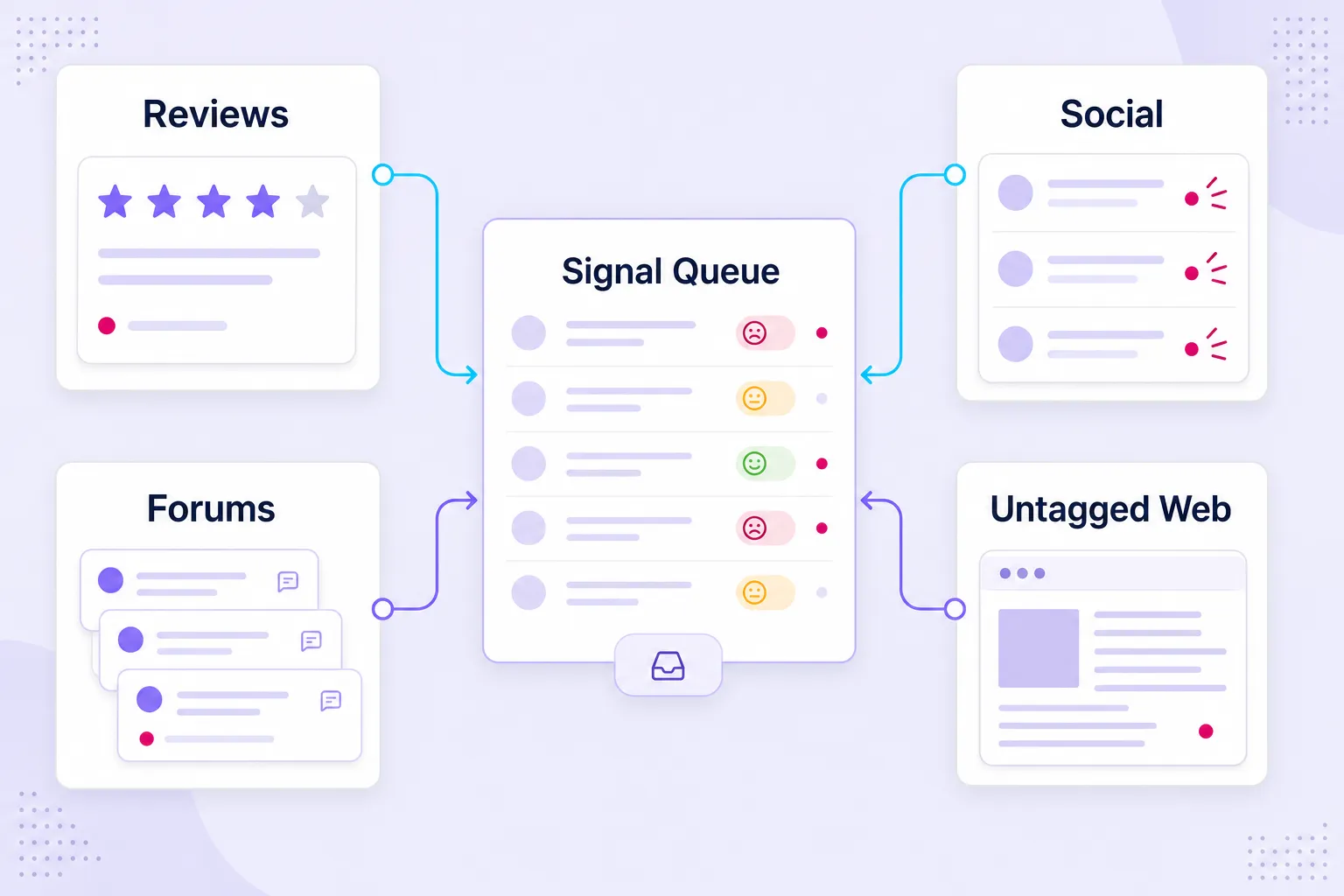
Here is where you find dissatisfied competitor customers, ranked by how I would prioritize them for a lean team. Each channel is evaluated the same way: what it surfaces, the decision threshold for acting, and the failure mode that quietly kills results.
| Channel | What you surface | Execution complexity | Time to first lead | Signal freshness |
|---|---|---|---|---|
| Review mining (G2, Capterra, Trustpilot) | Documented pain, dated, often named | Low | Same day | Days to months old |
| Social and community listening | Raw, untagged complaints as they happen | Medium | 1 to 2 weeks to set up | Real-time |
| Reddit and forums | Buyer objections and switching language | Medium | 1 to 7 days | Days old |
| Untagged web, news, and AI mentions | Considered "why we left" posts, spillover from outages | Medium | Weekly | Mixed |
Tactic 1: Review Marketplace Mining - Best for Zero-Budget Fast Starts
Takeaway: Start on G2, Capterra, and Trustpilot, filter for the 2.5-to-3.5-star convertible band, and score each review by the specific pain named in the text - not by the star count alone.
- Start with verified review platforms. They add verification and structure that raw social posts lack. G2 states that it validates reviewers through LinkedIn, business email, or a personal email when identity can be confirmed, and Capterra describes more than 2.5 million verified reviews checked by 30-plus human QA moderators against 20-plus controls per review. That verification is what separates a review lead from an anonymous rant.
- Filter for the convertible band, not one-star meltdowns. The convertible band sits roughly between 2.5 and 3.5 stars, and IB Lead's analysis puts the tightest working range around 2.8 to 3.3, with a volume floor of about 20 reviews so you know the problem is real and not a single bad day. A one-star review often signals someone who is already emotionally gone. A three-star review usually signals a rational buyer who likes the category but hit a specific, solvable wall.
- Score the sentence, not the star. The star rating is the filter, not the signal. The sentence inside the review is the signal. Score each review by pain type before it earns a rep's time.
- Protect identifiable employees. If the complaint came from an identifiable employee of the target company, be careful about how you reference it. Quoting an employee's public frustration back to their boss can expose or embarrass that person internally. Use the signal to inform your timing and your understanding of the account. Do not repeat it in a way that could create retaliation risk for the person who wrote it.
Decision threshold: the star rating is the filter, not the signal. The sentence inside the review is the signal. Score each review by pain type before it earns a rep's time.
| Pain type | Lead value | Example wording | Outreach angle |
|---|---|---|---|
| Support failure | High | "Support takes days to reply." | Response model, escalation path |
| Implementation drag | High | "Setup took twice as long as promised." | Migration plan, onboarding ownership |
| Missing feature | Medium to high | "No native integration with X." | Specific feature fit |
| Pricing surprise | Medium | "Costs jumped at renewal." | Transparent packaging, total cost |
| UX or adoption | Medium | "My team refuses to use it." | Simpler workflow, training |
| One-off bug | Low unless repeated | "It crashed yesterday." | Usually not enough alone |
Non-obvious insight: the mid-band reviewer is not only more likely to switch, they are easier to write to. A one-star reviewer wants the vendor gone yesterday. A three-star reviewer is still hoping to be rescued, which is exactly the posture that answers a helpful stranger.
Tactic 2: Real-Time Social Complaint Capture - Best for Same-Day Timing
Takeaway: Use X for short-lived triggers, pair the competitor's name with frustration terms in narrow saved searches, and act within the 48-hour window while the frustration is still hot.
- Use X when timing beats volume. X's API documentation sets clear rate and result limits, so build narrow saved searches rather than a firehose you cannot process. This channel is built for short-lived triggers: outages, feature removals, pricing changes, support delays, broken integrations, and public migration requests.
- Build boolean queries by competitor and pain category. Structure your queries to pair the competitor's name with frustration terms, and document your boolean search queries by competitor and pain category so the whole team runs the same logic:
("CompetitorName" OR "Competitor Nickname") ("down" OR "broken" OR "support" OR "pricing" OR "alternative" OR "switching") -jobs -hiring - Act inside the 48-hour relevance window. For a real-time social complaint, reach out only if you can make the message useful inside 48 hours. After that, the complaint may still matter, but the emotional urgency has cooled. That does not mean pounce in the first ten minutes. If an outage resolves in two hours, outreach looks opportunistic. If several people report the same failure, the signal strengthens.
Non-obvious insight: a single angry post is weaker than a cluster of mild ones. Five users asking "is anyone else dealing with this?" often signals broader account pain than one viral rant.
Tactic 3: Reddit and Forum Listening - Best for Buyer Objections
Takeaway: Treat Reddit and forums primarily as objection research - capture switching language and buyer objections, rely on saved searches over bulk collection, and disclose who you are if you participate.
- Listen for buyer objections, not just leads. Reddit's Data API documentation confirms enforced rate limits for free access, so rely on saved searches and manual review rather than bulk collection. People write longer here. They compare alternatives, ask for workflows, and explain what they tried before giving up.
- Use switching-language query patterns. . Forum listening pays off in technical and vertical markets: Shopify communities, Salesforce and HubSpot groups, developer boards, and industry Slack channels.
- Respect the room and disclose. If a community bans vendor promotion, do not pitch. Use the insight to sharpen targeting and content instead. If you do participate, disclose who you are and answer the actual question. Disclosure is not just polite here, it is often required by community rules and by the FTC's guidance on endorsements. An undisclosed vendor comment can do more brand damage than the lead is worth.
Non-obvious insight: Reddit is usually better for objection research than lead capture. The poster may be anonymous, but the thread tells you exactly what your sales team will hear on the next ten calls. Turn a "how do I migrate from X?" thread into a migration checklist, and a "why is X so expensive now?" thread into a pricing comparison guide. That is where listening becomes sales enablement.
Tactic 4: Untagged Web, News, and AI Mention Monitoring
Takeaway: Use a monitoring workflow to catch untagged "why we left" mentions across web, news, blogs, and forums that never reach a review site or tag a social handle.
- Set a no-budget baseline with Google Alerts. Google Alerts sends an email when new search results appear for a term, which makes it a fair no-budget baseline for competitor names, product phrases, and complaint terms. Its weakness is not that it is useless, it is that it is incomplete and noisy, and it misses most social and forum chatter.
- Layer a dedicated monitoring platform for untagged mentions. This is the layer where a dedicated monitoring platform earns its place, because catching untagged mentions across the web at scale is not something native search does well. In this niche, BrandMentions is best suited to real-time complaint capture across untagged social, news, blog, and forum mentions, with sentiment attached and AI brand-visibility tracking that shows how answer engines describe you and your competitors. Competing tools solve adjacent problems, as the table below shows.
| Tool | Best-suited strength |
|---|---|
| BrandMentions | Real-time complaint capture across untagged social, news, blog, and forum mentions, with sentiment attached and AI brand-visibility tracking that shows how answer engines describe you and your competitors |
| Brand24 | Broad source set for lean teams |
| YouScan | Image and logo recognition |
| Meltwater | Extends into TV, radio, and print for PR teams |
If you are weighing coverage side by side, see how BrandMentions stacks up on our competitor comparison page and our best media monitoring alternatives breakdown. Pick the one whose coverage matches where your rival's customers actually complain, and use it for monitoring untagged mentions rather than as a substitute for judgment.
Non-obvious insight: an untagged "why we left" blog post or forum answer often beats a tagged complaint for displacement. Someone who wrote 400 words explaining their exit has usually done far more thinking than someone firing off an angry tag, and that thinking maps directly to your discovery call.
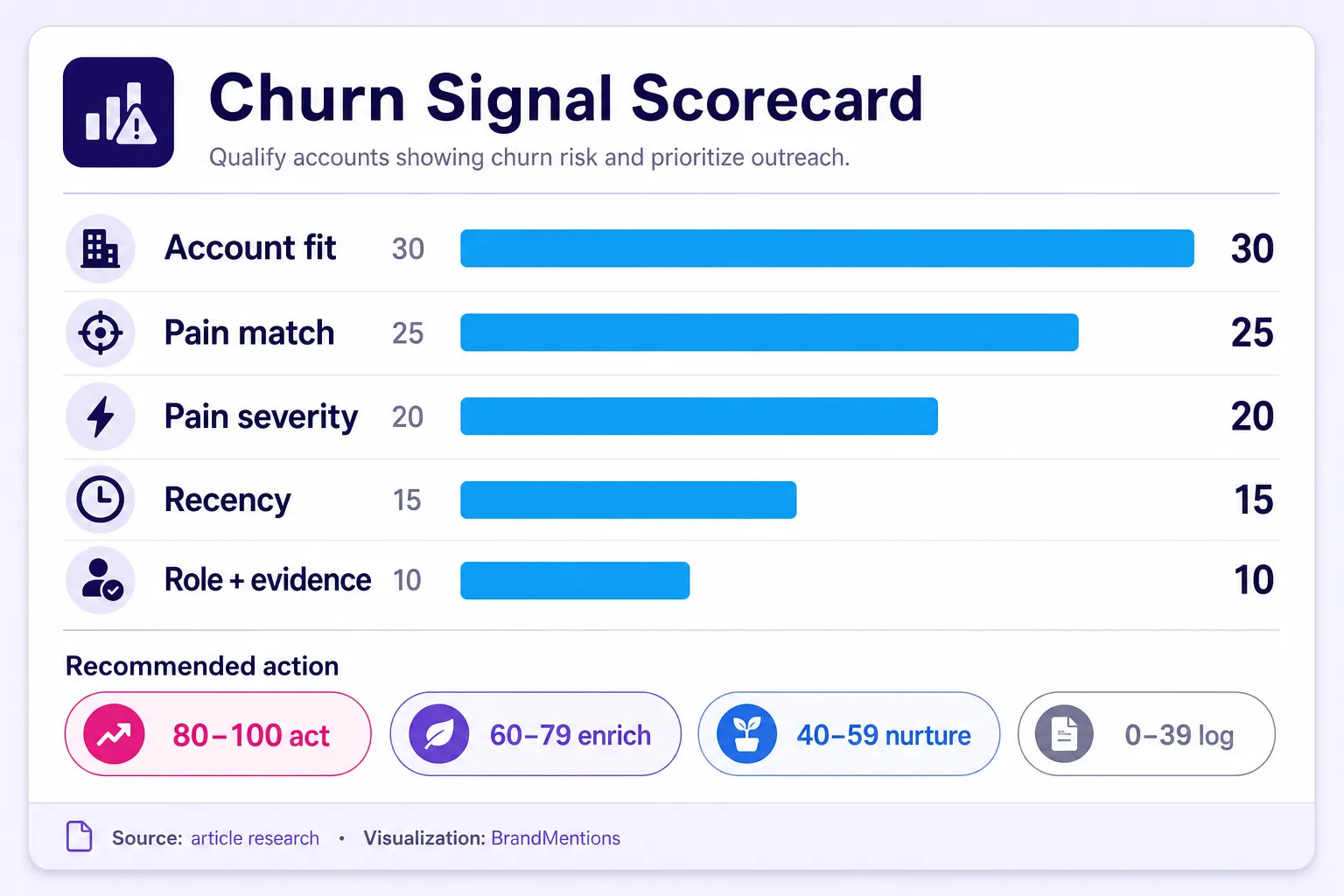
A complaint is not a lead until fit, pain, and timing line up. Until then, it is free market research, and there is nothing wrong with treating it that way.
Ethical and Legal Guardrails You Cannot Skip
Get this section wrong and the reply rates do not matter. Do not treat this as a loophole for mass unsolicited email.
Is cold B2B email legal by jurisdiction?
Cold B2B email is legal in the US, UK, and most of the EU when done correctly, but the standard for "correctly" varies sharply by country.
| Jurisdiction | B2B cold email stance | What you must do |
|---|---|---|
| US (CAN-SPAM) | Legal without prior consent | Truthful headers, non-deceptive subject line, valid physical postal address, clear ad identification, working opt-out honored within 10 business days |
| UK (PECR / ICO) | Permitted to corporate subscribers | Identify yourself and offer an opt-out; the electronic-mail consent rule does not apply to corporate subscribers the way it applies to individuals |
| France (CNIL) | Relatively permissive | B2B to professional addresses about professional topics is generally allowed |
| Germany | Strictest | Effectively expects opt-in even for B2B |
CAN-SPAM (US). The FTC's compliance guide is the primary source, and penalties can reach $53,088 per violating email.
GDPR (EU) and PECR (UK). Recital 47 of the GDPR states that direct marketing may be a legitimate interest, but only after a balancing test against the person's rights and reasonable expectations. Document that assessment. In the UK, the ICO confirms that the electronic-mail consent rule does not apply to corporate subscribers the way it applies to individuals, so B2B email to a company address is permitted provided you identify yourself and offer an opt-out. Personal addresses (an @gmail or @me.com) get far stronger protection than a professional identity, so avoid them.
Phone and SMS. If your sequence adds calls or texts, you enter a different legal regime. In the US that means the TCPA and a growing set of state mini-TCPA laws, plus call-recording consent rules that vary by state. Do not bolt SMS or cold calls onto a displacement play without checking these separately from your email rules.
Referencing a competitor. Keep factual claims about a rival accurate and provable. Repeating a customer's opinion is generally safe. Making your own false or misleading statement about a competitor's product can expose you to commercial disparagement, defamation, or unfair-competition claims, and trademark misuse if you overreach on their branded terms. State facts, cite the customer's own words, and stop there.
Data minimization and retention. Capture only what a legitimate business decision requires: source URL, date, company, a short pain summary, role category, score, and outreach status. Do not copy long review text into the CRM, and do not enrich personal profiles just because you can. Set a retention period, define how you handle a data-subject access request, keep a record of your lawful basis, and delete records that no longer serve the purpose. Maintain a suppression list for existing customers, open opportunities, unsubscribed contacts, active partner discussions, and anyone who objected.
Provenance. If a prospect replies "how did you get my email?", you need a source, a timestamp, and a documented reason ready immediately. That habit is your best protection and your fastest way to sound credible instead of creepy.
Review integrity. Never pay for negative competitor reviews, never coordinate review bombing, and never publish comparison content that implies fake customer experiences. The FTC's 2024 final rule bans fake reviews, review suppression, and deceptive review practices. Mining real complaints is fine. Manufacturing them is not.
Deliverability, which is compliance by another name. Gmail's sender requirements are the operating floor: authenticate SPF, DKIM, and DMARC, use TLS, keep spam complaint rates below 0.30%, and support one-click unsubscribe for bulk senders. Even below the 5,000-per-day bulk threshold, follow the same discipline. Send from a dedicated domain (never your primary), keep lists small and relevant, and cap volume per mailbox rather than pushing one inbox hard. And stop grading on open rate. Apple's Mail Privacy Protection pre-fetches messages and registers opens whether or not anyone read them, which inflates open rates across most B2B campaigns. Track replies and bounces instead.
How to Write Outreach Messages That Actually Get Replies
This is where most displacement outreach self-destructs. The instinct is to attack the competitor. Resist it.
Name the pain, never the vendor.
The strongest displacement copy does not name the rival at all. Naming the competitor makes you sound threatened. Naming the frustration the buyer already feels, and proving you understand it better than the vendor they are paying, reads as quiet confidence.
There is also a surveillance trap. If you write "I saw you were on our pricing page at 2 p.m.," the prospect blocks your domain. Use the signal to inform your timing, but let the business problem inform your copy. The complaint is your reason to write today. It is not the content of the email. Reading the emotional register correctly matters here too, which is why detecting negative sentiment before you draft helps you set the right tone, from measured to urgent.
Bad vs. Better
| Bad framing | Better framing |
|---|---|
| "Saw your one-star review of Competitor." | "Noticed your team has been dealing with reporting delays around month-end." |
| "We beat Competitor on support." | "Teams usually evaluate us when response time and implementation ownership become blockers." |
| "Want to switch?" | "Worth comparing notes on how teams handle this without a disruptive migration?" |
| "Our product is cheaper." | "If renewal cost is the issue, I can send a plain breakdown of where teams usually find savings." |
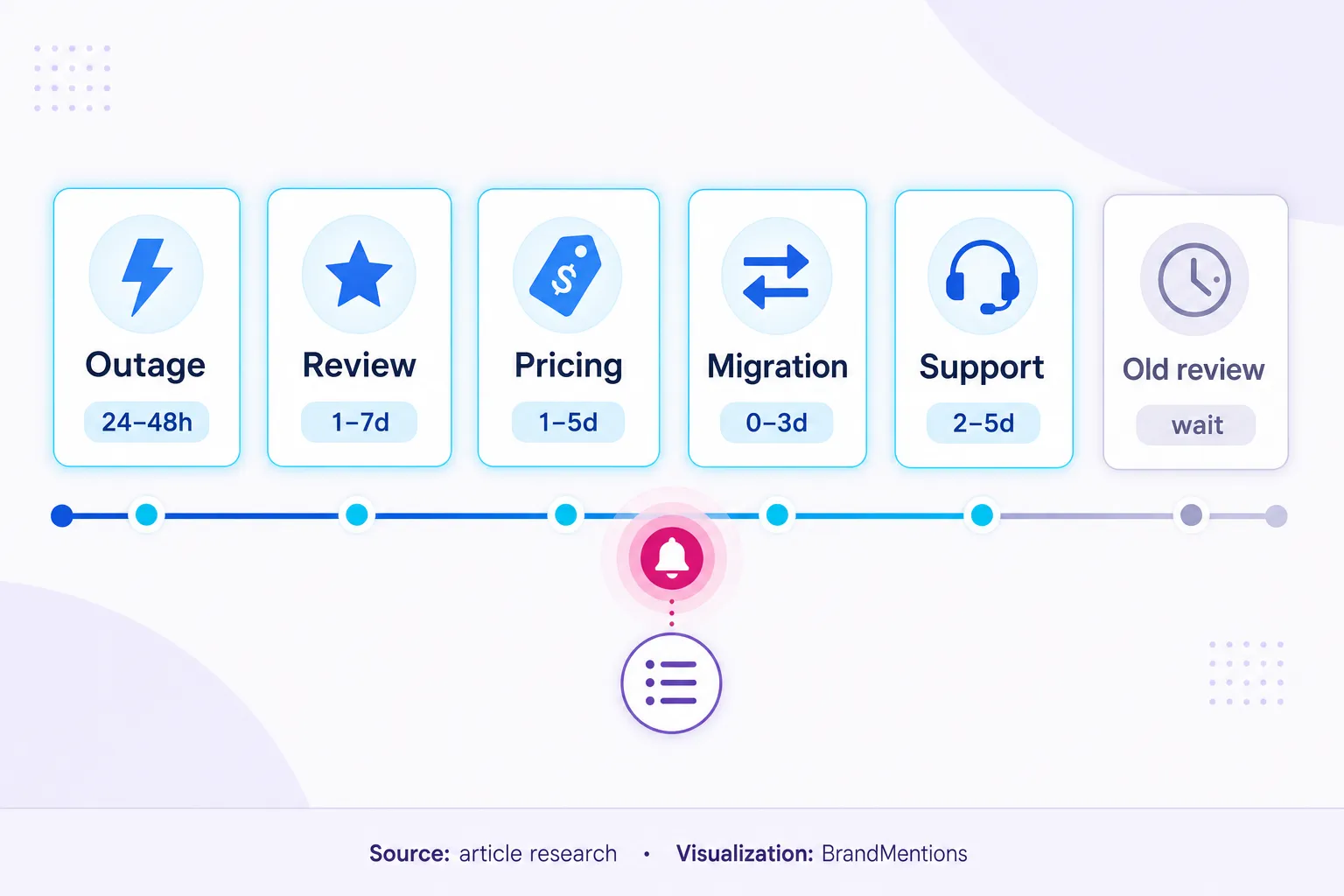
Timing: When to Reach Out for the Highest Response Rates
Timing depends on the trigger, so do not automate a single window across every signal type.
| Trigger | Outreach timing | Message angle |
|---|---|---|
| Public outage complaint | 24 to 48 hours, only if the issue persists or repeats | Continuity, not a pitch |
| Negative verified review | 1 to 7 days | Ask whether the issue is still active |
| Pricing anger | 1 to 5 days | Cost clarity and renewal planning |
| Migration question | Same day to 3 days | Practical checklist or comparison |
| Support complaint | 2 to 5 days | Escalation model and ownership |
| Old review, high-fit account | Wait for a second signal | Nurture, do not cold-pitch |
The through-line is speed of detection. Wiring your monitoring feed straight into a queue that a human checks within the hour, using real-time mention alerts rather than a dashboard you open once a day, is the difference between a warm lead and a missed one. Manual once-a-day checking simply cannot catch an outage window that closes by lunch.
A Proven 4–7 Email Sequence for Winning Competitor Customers
Benchmarks need context, and the reply-rate numbers you will see quoted depend entirely on how each source counts.
The takeaway is not "expect 10%." It is to define your denominator before you set a target. Signal-personalized outreach that references a specific, real trigger is widely reported to land in the 15 to 25% reply range, though that figure comes from vendor analysis rather than independent research, so treat it as a directional ceiling, not a promise. (Instantly)
Takeaway: Run a four-touch sequence - extendable to seven only for top-scoring signals - where the first email carries the sourced complaint, every follow-up adds a genuinely new angle, and you pause the instant anyone engages.
- Email 1 (Day 0) - the Problem Opener. Lead with the specific frustration you sourced. No paragraph about yourself. One low-friction ask. Keep it under 80 words.
- Email 2 (Day 3) - the Diagnostic. Add one genuinely useful thing: a short framework to separate whether the issue is setup, support, or product fit. Never a bare "just checking in." If you have nothing new to say, do not send. Silence protects your domain better than a meaningless ping.
- Email 3 (Day 7 to 8) - the Reframe. Address the switching-cost fear directly, because that fear is what stalls displacement deals. Offer the internal business case: cost of staying vs cost of switching.
- Email 4 (Day 14) - the Breakup. Acknowledge you will stop. This one works, so do not waste it. Keep it plain text with no tracking pixel.
Extend to 5 to 7 touches only for very high-scoring signals, and only when each email carries a fresh angle. Pause the instant anyone engages, and run one sequence per ICP segment. Do not blend founders and CFOs in the same cadence.
Email-only outbound caps around 2 to 3% reply. The same prospects reached through a coordinated email plus LinkedIn plus phone sequence reply meaningfully higher, and a public complaint gives you a natural, non-creepy reason to appear on LinkedIn. One caution most guides ignore: LinkedIn enforces weekly connection-request and messaging limits and prohibits automation tools. Treat LinkedIn as a manual, low-volume channel, not another mailbox to blast.
Tools and Team Requirements for Competitor Lead Generation
Do not start this without a rough resourcing picture. These are planning bands, not quotes, and they scale with team size.
| Resource | Typical band | Notes |
|---|---|---|
| Monitoring tool | Entry tiers common in the low tens to low hundreds per month | Free alerts work for one competitor, paid tiers for multi-source and sentiment |
| Data enrichment | Per-contact or seat-based | You only enrich accounts that clear the scorecard, which keeps this small |
| Email infrastructure | Dedicated domains and warmed mailboxes | Budget for warm-up time of about three weeks before the first send |
| SDR time | A few hours per week to start | One person can run 50 to 100 scored signals a month manually |
Start with one competitor and one channel. A single person with a monitoring alert, a spreadsheet, and a scorecard can prove the motion before you spend on tooling or headcount.
How to Measure Success: Replies, Meetings, and Pipeline
Do not grade this on emails sent or opens. Those metrics turned to fiction the day Apple started pre-fetching mail. Grade the system on how efficiently signals become revenue.
| Metric | Formula | Why it matters |
|---|---|---|
| Signal-to-qualified rate | Qualified accounts / captured signals | Source quality |
| Positive reply rate | Interested replies / delivered emails | Commercial relevance |
| Meeting rate | Meetings booked / delivered emails | Sales conversion |
| Time from signal to first touch | Measured in hours | Speed of the whole machine |
| Pipeline per signal type | Pipeline created / qualified signals by pain type | Where the strategy proves itself |
Track by pain type, not in aggregate. Support complaints may generate replies but low win rates because buyers cool fast. Implementation complaints often convert better because the buyer needs a safer migration. Pricing complaints can attract bargain hunters who churn later. Also watch channel quality: Reddit-sourced leads frequently reply more but book fewer meetings, because the poster may lack purchase authority.
Competitor Lead Generation Glossary
- Competitor dissatisfaction lead generation: Identifying public signals that a rival's customer is unhappy, qualifying account fit, and reaching out with an ethical alternative timed to the switch moment.
- Convertible band: The star range where reviewers are most likely to switch - roughly 2.5 to 3.5 stars, with the tightest working range around 2.8 to 3.3 and a floor of about 20 reviews.
- 48-hour relevance window: The period after a real-time social complaint during which outreach can still feel useful; act only if you can add value inside 48 hours, and never pounce in the first ten minutes.
- Signal half-life: The decay rate of a churn signal - most triggers lose roughly half their value within 30 to 60 days, which is why recency is scored.
- Forwarding test: The ethics check - if the prospect forwarded your email to the competitor you are displacing, would you still be comfortable? If not, rewrite it.
- The complaint is the brief: The principle that a good complaint supplies the use case, failed promise, emotional cost, and the buyer's own internal language.
Frequently Asked Questions
Is it legal to email a competitor's unhappy customer I found through public reviews or social posts?
Yes, for B2B outreach in the US, UK, and most of the EU, when done correctly. Public professional data on a company site or LinkedIn generally satisfies GDPR's legitimate-interest basis, provided you document the balancing test, keep sender identity accurate, include a physical address, and honor opt-outs immediately. Avoid personal email addresses, and note that Germany effectively requires opt-in even for B2B, while France and the UK are more permissive.
What star rating should I target when mining competitor reviews?
Focus on the roughly 2.5 to 3.5 band, with a tighter working range around 2.8 to 3.3 and a floor of about 20 reviews. Products below 2.5 stars often signal a customer already gone. Above 3.5, the pain rarely justifies the cost and risk of switching. Read the review text itself, because the specific complaint becomes your opening line, not the star count.
Should displacement outreach name the competitor directly?
No, not unless the prospect raises it first. The strongest copy names the frustration the buyer already feels and shows you understand it better than the vendor they are paying. Naming the rival reads as insecure and aggressive. Use the signal to time your outreach, and let the business problem shape the message.
How many emails should the displacement sequence include?
Four to seven, but only when each touch adds a new angle. In Instantly's 2026 data, 58% of replies came from the first email and 42% from follow-ups, so the first message has to carry the relevance. Anything past seven touches rarely adds value and raises spam-complaint risk.
How fast do I need to respond to a competitor churn signal?
Speed of detection is the whole advantage. For strong displacement opportunities (a scorecard score of 80 to 100), reach out within 48 hours; for a real-time social complaint, act inside the 48-hour relevance window. Because signals lose roughly half their value within 30 to 60 days, wiring your monitoring feed into a queue a human checks within the hour beats a dashboard you open once a day.
How do I measure whether competitor churn lead generation is working?
Grade the system on how efficiently signals become revenue, not on emails sent or opens. Track signal-to-qualified rate, positive reply rate, meeting rate, time from signal to first touch, and pipeline per signal type - and break results out by pain type rather than in aggregate. Run at least 50 to 100 scored signals against a control cohort of generic outbound before you judge it.
What is the difference between competitor churn signals and buying intent data?
Buying intent data tells you a company is statistically in-market, inferred from behavior and often arriving late without a name or reason. A competitor churn signal is a specific, named person publicly stating a frustration, with a timestamp and a quote you can act on. Use account-level intent to prioritize your list and contact-level churn signals for the actual outreach.
Which tool is best for capturing untagged competitor complaints?
Pick the platform whose coverage matches where your rival's customers actually complain. BrandMentions is suited to real-time capture of untagged social, news, blog, and forum mentions with sentiment and AI brand-visibility tracking; Brand24 covers a broad source set for lean teams; YouScan leads on image and logo recognition; and Meltwater extends into TV, radio, and print for PR teams.
Conclusion: Frustration Is a Timestamp, Not a Trophy
The teams that own this tactic in 2026 will not be the ones with the biggest lists or the cleverest subject lines. They will be the ones that shortened the distance between a competitor's customer voicing a problem and a helpful human responding to it. That distance, measured in hours, is the entire advantage.
Everything here reduces to one loop. Listen for the specific, dated, public complaint. Score it for fit, pain, and freshness before sales ever sees it. Reach out fast with the problem, not the pitch, at the center. Then measure pipeline per signal so you learn which frustrations actually convert. Do that with your lawful basis documented and your empathy real, and you are not exploiting churn. You are solving it faster than the vendor who caused it.
Start narrow this week. Pick one competitor, monitor their name plus five frustration terms, and commit to responding to every qualifying signal within the day. The first booked meeting will teach you what no benchmark can: the warmest lead in your market is the customer someone else already let down.
Filed under: Digital Marketing