How to Track Brand Mentions Across the Web (Without Drowning in Noise): The Complete 2026 Playbook
A complete 2026 playbook for cross-web brand monitoring: keyword architecture, Boolean noise-filtering, alert tuning, mention weighting, and routing insights into action.
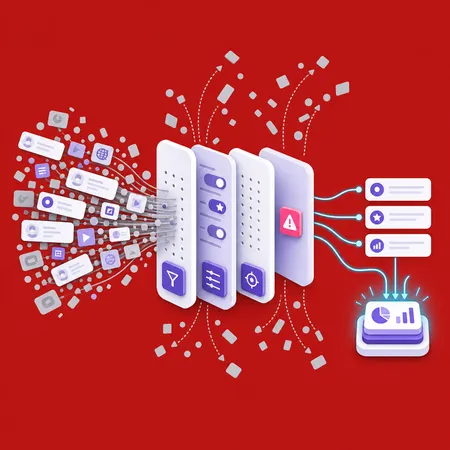
BBrand mention tracking is the process of monitoring references to your company, products, people, and campaigns across the web from news sites and social platforms to forums, reviews, podcasts, videos, and AI-generated answers. But tracking mentions is the easy part. After years of building and working with social listening technology, I’ve learned that the real challenge is separating meaningful signals from the noise.
A brand can generate thousands of mentions and still miss the one customer complaint that matters, the comparison post that could influence a buyer, or the emerging issue that turns into a crisis. In 2026, effective brand monitoring isn't about collecting everything. It's about filtering intelligently, understanding context, prioritizing what matters, and getting the right insight to the right team at the right time.
When we started building social listening technology, I thought the biggest challenge would be collecting enough data. It turned out to be the opposite: helping people decide what not to look at. More mentions don't automatically give you more insight. Sometimes they just give you more tabs to ignore.
Summary
- Brand monitoring in 2026 spans web pages, news, blogs, forums, Reddit-style communities, reviews, YouTube, podcasts, social platforms, and AI answer engines. Pew Research Center's 2025 data shows YouTube at 84% adult usage, Facebook at 71%, Instagram at 50%, TikTok at 37%, Reddit at 26%, and X at 21%, while Edison Research reports 58% of Americans age 12 and up listened to a podcast in the last month.
- Noise reduction starts inside the query, not the inbox. Exact-match phrases,
AND,OR,NOT, source filters, and date operators decide whether you built a monitoring system or a firehose. - AI answers now shape discovery at scale. ChatGPT surpassed 900 million weekly active users as of February 27, 2026, and Google's AI Overviews reached roughly 2.5 billion users a month by mid-2026, so what a model says about you is a monitoring event, not a curiosity.
- AI answers are not automatically true. A 2026 measurement study of Google AI Overviews decomposed answers into 98,020 atomic claims across 55,393 queries and found 11.0% were unsupported by the pages cited. Treat AI mentions as claims you audit, not verdicts you report.
- Reviews sit at the edge of purchase. BrightLocal's 2026 survey found 97% of consumers rely on reviews, 74% only trust reviews from the last three months, 31% will only use a business rated 4.5 stars or higher, and 81% expect a response within a week.
- Sentiment is a prediction with an error rate nobody printed on the dashboard. Automated polarity flattens intensity and stumbles on sarcasm, so weight and route mentions by intent, not by an aggregate mood score.
At a Glance: Core Tactics by Goal
- Best for zero budget: Google Alerts plus native platform search. Free, covers news and blogs within a day, but leaves routing, deduplication, sentiment, and AI answers on your shoulders.
- Best for cutting noise fast: Boolean queries with negative keywords. This is the first real upgrade, because it kills predictable junk at retrieval, before it ever becomes an alert.
- Best for reputation risk: Review and complaint monitoring with response thresholds. Built for local, SaaS, marketplace, hospitality, and app brands where public complaints move conversion.
- Best for PR and executive visibility: Source-prioritized monitoring. Track journalists, analysts, newsletters, podcasts, and trade publications before you chase every casual social post.
- Best for competitive and category intelligence: Share-of-voice tracking with competitor and category queries run in parallel. This is weekly or monthly research, not firefighting.
- Best for 2026 visibility work: AI answer-engine mention and citation tracking. A different surface, a different owner, a different clock, and the one most teams still are not measuring.
How Is Brand Monitoring Different From Social Listening in 2026?
People use the two terms as synonyms. They are not, and the gap decides how much you miss.
What is brand monitoring? It is the continuous practice of tracking how your company, products, people, and campaigns are mentioned, discussed, and perceived across every digital channel, then enriching each mention with sentiment, reach, and source authority so you can act.
Social listening is a subset. It covers social platforms. Brand monitoring is the superset: it adds news, review sites, podcasts, YouTube transcripts, forums, and AI answers. If you only run social listening, you are structurally blind to a review-site friction spike, a podcast comparison, and the answer a prospect reads inside ChatGPT before they ever reach your site.
The non-obvious part is ownership and cadence. Traditional social monitoring belongs to community and support teams running near real time for crisis. AI mention tracking behaves like competitive research: weekly checks, monthly reviews, owned by content or growth. Same brand, two clocks. Trying to run both on one cadence is the first mistake, because you either drown the social team in slow-moving AI data or starve the AI work of the attention it needs.
Can Boolean Queries Still Cut Noise When Language Keeps Shifting?
Yes, with one honest caveat most guides skip. Boolean is the sharpest instrument you have for excluding noise you can predict. It is a weak instrument for catching the thing you did not anticipate.
A monitoring query only captures what you already thought to look for. Early crisis signals rarely arrive in the exact phrasing you wrote down. A product complaint surfaces through sarcasm, a defect gets described sideways, a new objection starts in a meme. If the language does not match your query, it does not exist in your dashboard.
That does not make Boolean obsolete. It makes it a filter, not a net. Run a tight core query for daily signal, and keep a deliberately loose "wildcard" query you review weekly to catch language drift before it becomes a blind spot. The relationships you define between terms are only as current as the day you wrote them. Language moves. Your query does not, unless you move it.
Should You Track AI Answer Engines the Same Way You Track Social?
No, and this is where most 2026 setups quietly break.
What is AI brand monitoring? It is measuring how your brand appears, and what gets said about it, inside answers generated by systems like ChatGPT, Google AI Overviews and AI Mode, Perplexity, Gemini, and Claude. The surface is not a public post you can scrape. It is a private answer a buyer sees inside a conversation, which means you cannot listen to it. You have to interrogate it.
The scale is why you cannot skip it. Google's own Search Central AI features documentation explains that its generative features are rooted in core Search ranking and quality systems, grounded in retrieval from the index, which means AI visibility rewards crawlable, well-supported content and trustworthy third-party context, not markup tricks. OpenAI's ChatGPT Search documentation confirms ChatGPT can search the web, may include inline citations, and appends utm_source=chatgpt.com to referral URLs, so some of this behavior is measurable in your own analytics.
The second reason is volatility. An AI answer is binary per prompt: you are in the choice set or you are not. There is no page two. The same question asked twice, on two accounts, in two locations, can return different brands, which is exactly why a single spot check tells you almost nothing.
Track the AI surface on its own clock. It updates on model cycles, not in real time, so treat it as monthly competitive research, and never assume your search rankings bought you a seat in the answer.
How to Track Brand Mentions Across the Web
The simplest way to track brand mentions is to:
- Define your brand, product, people, competitor, and campaign keywords.
- Add misspellings, aliases, and contextual terms.
- Use Boolean operators and negative keywords to remove predictable noise.
- Monitor relevant websites, news, social platforms, forums, reviews, podcasts, and video.
- Set alerts based on risk and intent rather than raw volume.
- Score and route important mentions to the right team.
- Track how AI answer engines mention and cite your brand.
You can build all of this manually, but you don't have to. A platform like BrandMentions can handle the heavy lifting building queries, monitoring the web, filtering noise, surfacing important mentions, and helping you understand how your brand appears in AI answers. The goal isn't to replace the strategy; it's to automate the repetitive work so your team can focus on the signals that actually matter. Yet, here's how to build that system properly.
Step 1: Build Your Mention Map and Keyword Architecture Before You Touch a Tool
What counts as a "mention"? Any reference to your brand, people, products, or campaigns on any indexable or trackable surface, whether or not it links to you and whether or not it spells your name correctly.
Start with where your buyers, critics, and answer engines actually are, not with "we should monitor social." Pew Research Center's social media usage data shows how differently each platform's audience skews, Edison Research's Infinite Dial puts monthly podcast reach at 58% of Americans 12 and up, and the Reuters Institute Digital News Report shows how fragmented news discovery has become. Different audiences, different surfaces, different noise profiles.
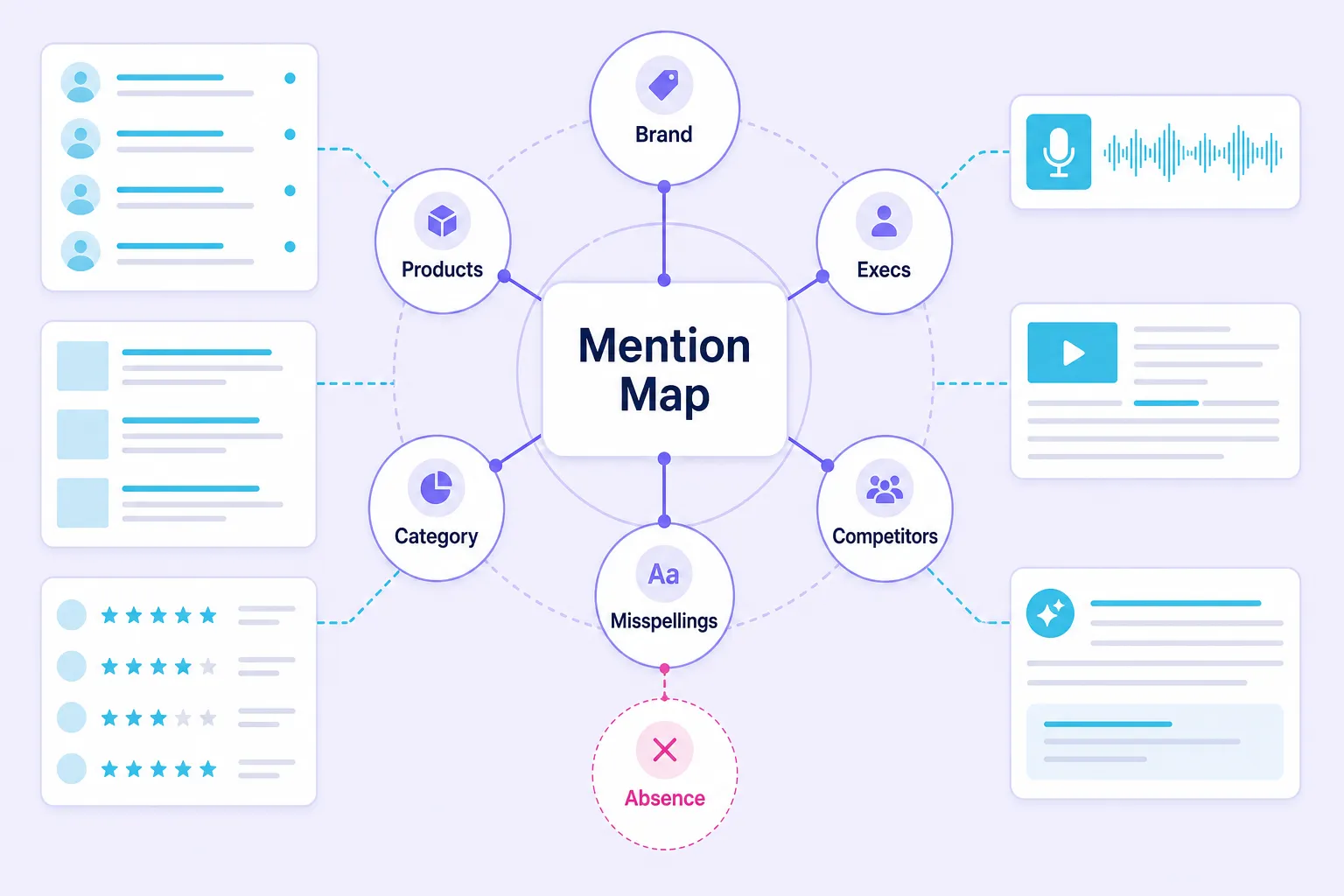
Most teams track one thing: the exact brand name. That is why they miss most of what matters. A complete architecture, mapped against a clear view of what counts as mentions, has layers you build deliberately.
One of the first things I learned from building a monitoring product is that your brand name is rarely the whole story. Customers don't always use your official name, and they certainly don't use it when they're frustrated. They abbreviate it, misspell it, describe the product without naming it, or talk about the problem instead.
- Exact brand and product terms: official name, spacing variants, old names, handles, hashtags, product and feature names.
- Ambiguous brand terms: the name plus a context word, for anyone whose brand collides with a common word.
- Executive and spokesperson names: these carry reputational weight far above their share of volume.
- Category terms: the problem language people use before they know your name.
- Competitor terms: rival names paired with switching or comparison words.
- Misspellings and machine errors: typos, voice-to-text errors, and auto-caption mangling.
Absence is a mention. If a buyer asks an answer engine or a community for the best tool in your category and three competitors appear but you do not, that silence has commercial meaning. Track category prompts precisely so you can see the gap where your name should be.
The non-obvious insight is that the misspelling layer is where crisis signal hides. Frustrated customers do not spellcheck. Voice assistants, auto-captions, and rushed posts mangle names constantly. A query that only matches your clean brand name systematically filters out your angriest customers and the transcripts that feed AI answers.
Your keyword architecture is the ceiling on everything downstream. No alert, sentiment score, or weighting model can surface a mention your queries never captured in the first place.
Step 2: Write Boolean Queries and Negative Keywords That Kill Noise
This is where signal is won or lost. A flat keyword list is the reason your feed fills with garbage.
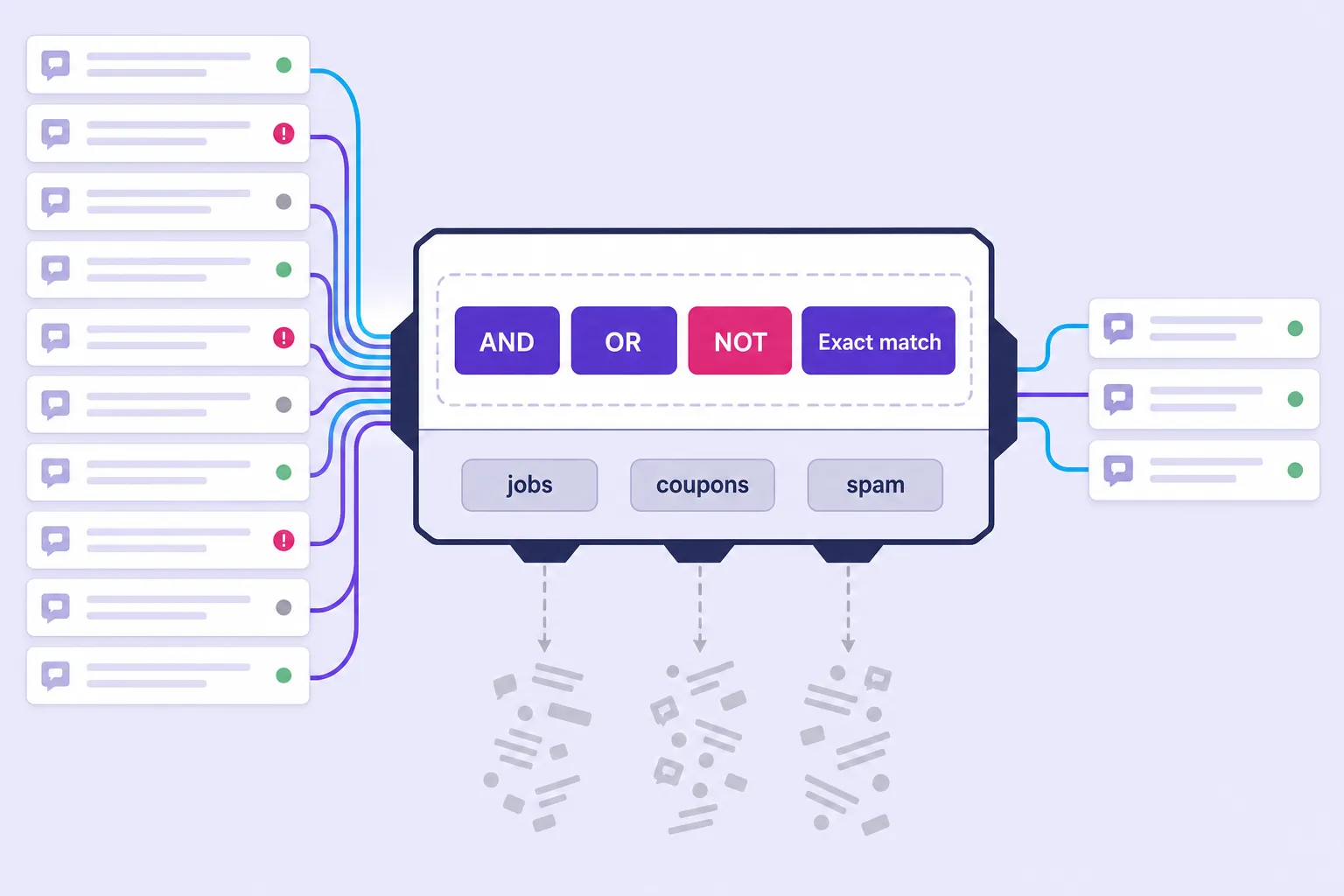
The core operators are simple, and learning Boolean query operators once pays off forever. AND narrows, OR groups variants, NOT excludes, and parentheses control order. The same logic scales: GDELT's DOC API runs exact-phrase and OR-block queries across global media, and the principle is identical whether you are filtering one dashboard or the whole news web. Use inclusions to capture possible relevance, then use exclusions to reject the false positives you can predict.
A workable structure for a brand with an ambiguous name:
("YourBrand" OR @YourHandle OR "#YourCampaign")
AND (review OR pricing OR alternative OR issue OR "vs")
NOT (jobs OR hiring OR coupon OR parody OR [unrelated product])
Build the negative list from real junk, not imagination. Let the first 100 to 300 raw mentions show you what your brand collides with, then classify the noise.
| Noise type | What it looks like | Filter action |
|---|---|---|
| Same-name entity | Another company, person, city, song, movie | Add a context requirement |
| Coupon and spam | "promo code," "free trial coupon" | Exclude if irrelevant |
| Jobs and hiring | Recruiter posts, job boards | Route to HR or exclude |
| Investor chatter | Tickers, earnings, price targets | Route to finance or exclude |
| Own content | Your blog, help center, press room | Exclude from earned-mention views |
| Syndication | One press release copied across sites | Deduplicate or tag |
| Bot and scraper pages | Low-quality feed-repeat pages | Exclude the domain |
| Wrong geography | Markets you do not serve | Filter by country or language |
Every noisy mention becomes a rule. When junk gets through, it should become a negative keyword, a source exclusion, a routing rule, or a training example. If it becomes none of those, you are choosing to keep paying attention tax on it forever.
This is one of the habits I would recommend to anyone building a monitoring workflow: don't just delete bad results. Learn from them. Every false positive tells you something about how your query understands the world and how it needs to improve.
The non-obvious insight: your negative language skews your own sentiment baseline. If your query leans heavily on "broken," "scam," and "hate" to catch complaints, you will read your brand as unhealthier than it is. Balance the polarity of your terms unless a query is deliberately hunting for one.
This is the stage where a worked example helps. BrandMentions is useful here for noise-controlled cross-web tracking: you build the layered query, toggle exact match on the ambiguous core term, add the NOT list as its own field, and preview the live mention stream before you save, so you catch the leak on the setup screen instead of three days into a polluted dashboard. That is its specific niche, keeping the feed clean enough across web, news, social, forums, and reviews that people actually keep using it. Not a magic button.
Step 3: Choose and Prioritize Sources by Decision Value
Treating every channel equally is a subtle form of noise. A mention earns priority when it can change a decision.
The full 2026 map is wider than most setups assume: social, news and monitoring news sources, blogs, forums, Reddit and Quora, review sites, podcasts, YouTube, and AI answers. Prioritize by where decisions actually get made in your category, not by raw volume.
YouTube earns weight because its recommendation system draws on more than 80 billion signals, per YouTube's official documentation, which means a single well-placed comparison video can resurface for months. Reddit earns weight because it is high-context and heavily cited by answer engines, but the operational limits matter: Reddit's Data API documentation sets 100 queries per minute per OAuth client ID for eligible free access and recommends deleting stored user content within 48 hours. Reviews earn weight because they sit at the edge of purchase, and BrightLocal's 2026 review survey shows 31% of consumers now filter for 4.5 stars or higher, up from 17% the prior year, while 50% are put off by generic responses.
Rank sources by three factors, not one:
| Priority | Condition | Example | Action |
|---|---|---|---|
| P1 | High reach plus negative or legally sensitive | National outlet, viral creator, high-traffic review | Immediate comms review |
| P2 | High purchase intent | Comparison thread, "alternative to" post, review | Route to marketing or sales |
| P3 | Repeated product issue | Same feature complaint, multiple people | Route to product and support |
| P4 | Category authority | Analyst, podcast, newsletter, expert blog | Route to PR or content |
| P5 | Low-context chatter | Casual post, no reach or intent | Archive or weekly digest |
The non-obvious insight: rank sources by reach, intent, and retrievability. A niche forum thread that answer engines can crawl now matters more for your future AI visibility than a high-volume post buried inside a closed feed nobody can index. Source authority is diverging from source popularity, and a focused specialist site can outcite a giant generalist in its own niche.
For podcasts and video specifically, the signal is often trapped in audio. If your tool transcribes, monitor the transcript, show notes, and guest pages. If it does not, sample the top 10 shows and channels in your space manually. On YouTube, remember the mention can live in the title, description, auto-captions, comments, community posts, or a creator reply, not just the spoken audio.
Step 4: Configure Alerts Around Signal, Not Volume
Real-time alerting on every mention is the fastest route to alert blindness. The goal is to be interrupted only when something changes.
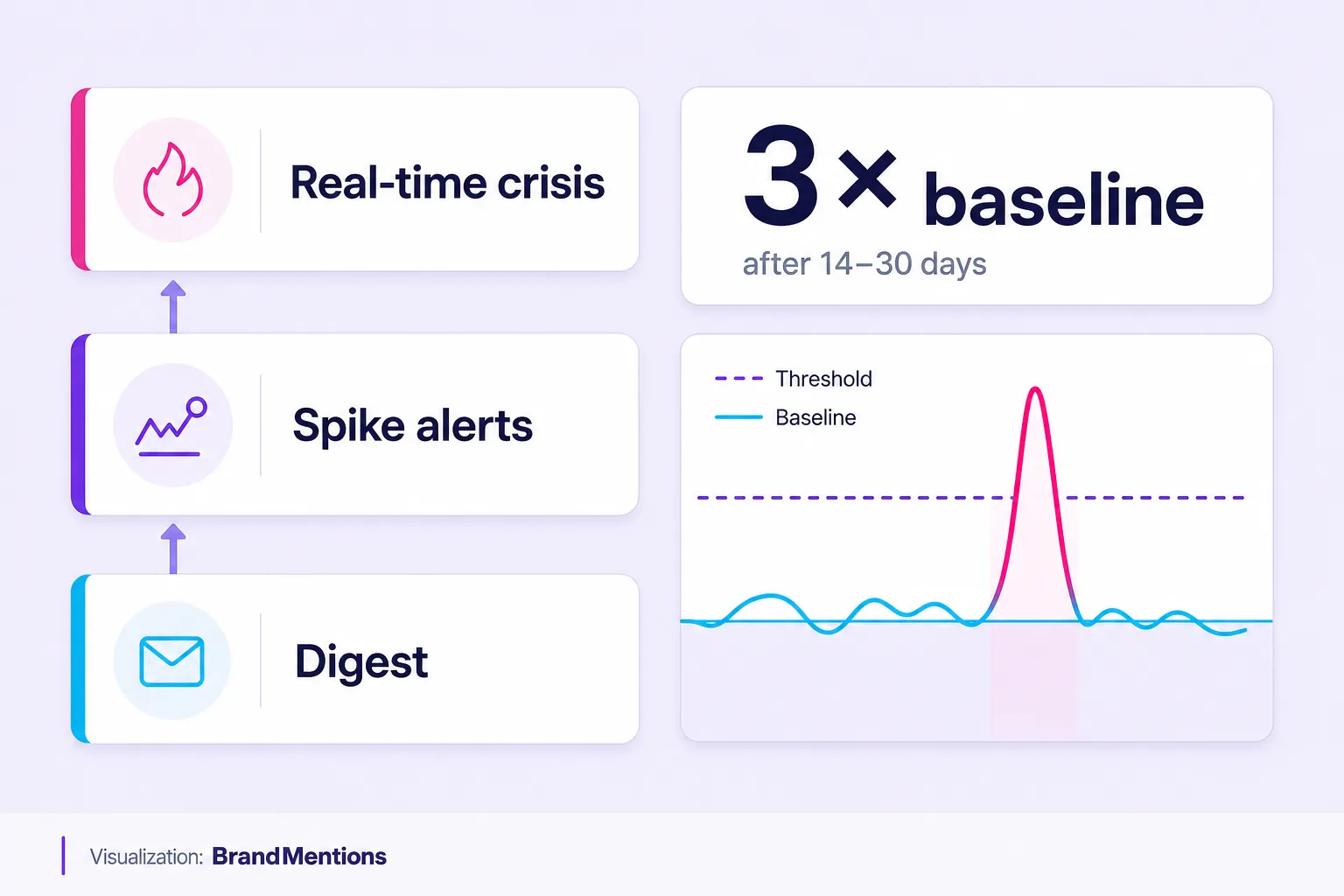
Run three tiers. Real-time crisis alerts on your tightest negative-signal query. Spike and anomaly alerts that fire when volume or sentiment deviates from baseline. Scheduled digests for everything else. If you are starting free, the frequency and source options inside Google Alerts already let you split "as-it-happens" from "once a day" and news from discussions, which is enough to prove the model before you pay for anything.
The engine of good alerting is the baseline. You cannot detect an anomaly without a normal, so run 14 to 30 days first and establish your typical daily volume and sentiment mix before you set a single threshold.
The Signal Floor: set spike alerts as a multiple of baseline, not a fixed mention count. A brand averaging 20 mentions a day and one averaging 2,000 need completely different triggers, and a percentage deviation travels across brand sizes where a raw number does not. Three times a rolling 30-day average is a reasonable starting heuristic you then calibrate against real false alarms and misses.
Watch for one trap here. A sudden volume jump can reflect delayed indexing or a platform ingesting a backlog of older posts, not a real-world event. Confirm a spike is happening now, in the raw mentions, before you escalate a ghost.
Real-time alerts should be rare. If everything is urgent, your monitoring system has no judgment, and your team will learn to ignore it.
The non-obvious insight: the first two weeks are calibration, not reporting. Use them to tune query logic, source filters, deduplication, and sentiment review. Do not present trend conclusions off a query you have not cleaned yet.
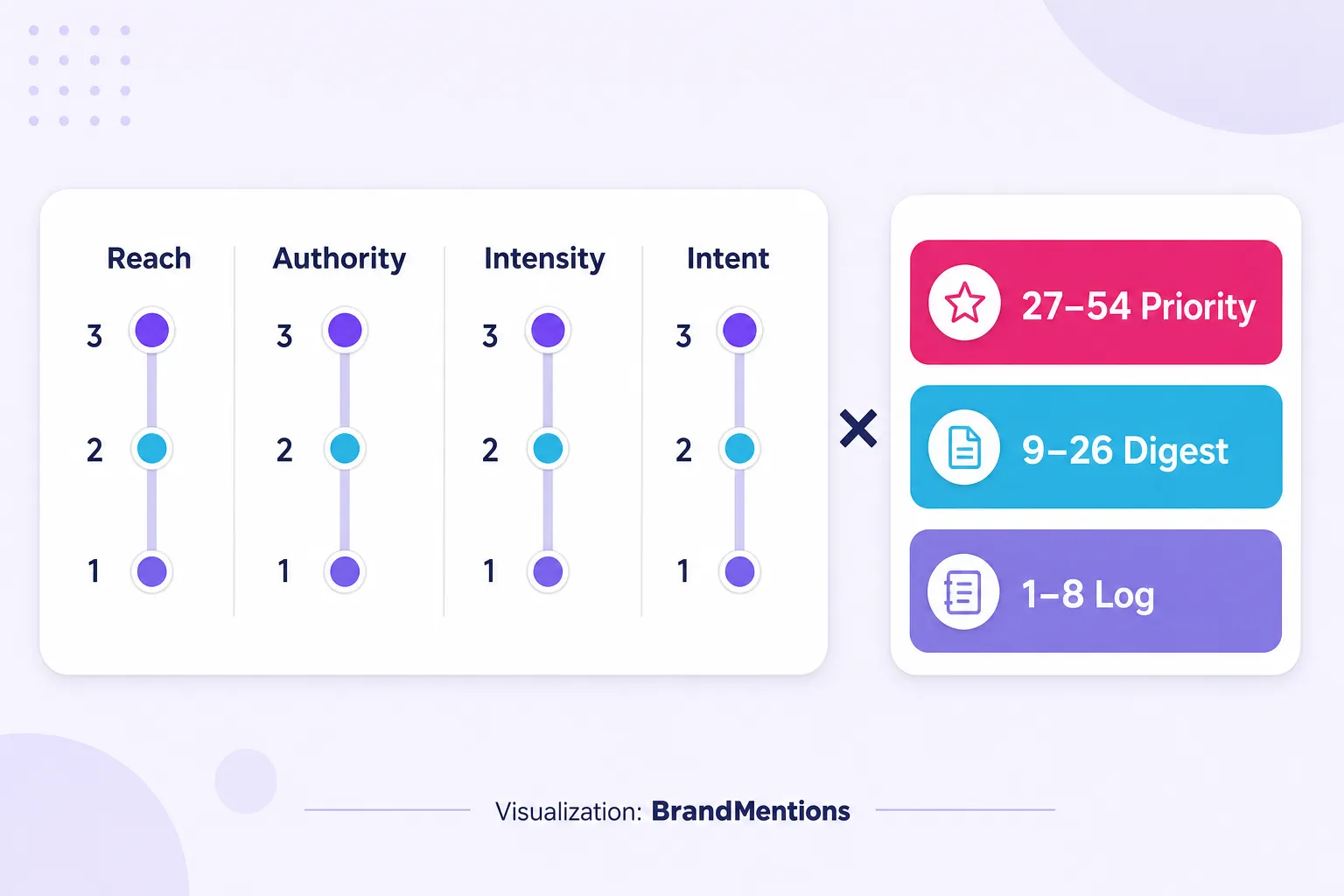
Step 5: Scoring What Survives, the Mention Priority Matrix
Filtering removes junk. Weighting tells you what to do first with what remains. Without it, a viral joke and a regulator's post look identical in the inbox.
Start with sentiment, but hold it at arm's length, and lean on filtering quality mentions rather than raw counts. Automated polarity flattens intensity: a mildly annoyed customer and a furious one can both read "negative," and they need opposite responses. Read the raw mention before you escalate.
Score each surviving mention on four factors from 1 to 3, then multiply. Multiplication is the point. It forces a mention to be meaningful on several axes at once before it becomes urgent, which is exactly how noise gets suppressed.
| Factor | Score 1 (Low) | Score 2 (Medium) | Score 3 (High) |
|---|---|---|---|
| Reach | Small account, low-traffic page | Mid-tier account or publication | Large audience or high-authority domain |
| Source authority | Anonymous, low trust | Established forum or reviewer | Cited by AI engines, tier-1 press, or a buyer community |
| Intensity | Neutral or mild | Clearly positive or negative | Extreme emotion, crisis, or advocacy |
| Buyer intent | Passing reference | Comparison or research | Purchase, churn, or switching language |
Score interpretation:
- 27 to 54: Priority. Route to a human today.
- 9 to 26: Review in the daily or weekly digest.
- 1 to 8: Log for trend analysis. Interrupt no one.
Loud is not the same as important. A high-reach, high-intent, high-authority negative mention scores past 27 and demands a response. A high-reach but low-intent joke scores in the teens and belongs in a digest. Same negative sentiment, radically different response. That distinction is the whole game.
The non-obvious insight: novelty deserves hidden weight. The first mention of a brand-new complaint theme matters more than the fiftieth repeat of a known issue, even though the old issue has more total volume. Your weekly review should start with "what changed," not "what was loudest."
Step 6: Deduplicate, De-Bot, and Respect the Rules
Two sources of noise get almost no attention and quietly wreck dashboards: duplication and manipulation.
Deduplication is not optional at scale. One press release syndicated across 40 sites is one event, not 40. Retweets and quote-posts, scraped copies, and canonical-versus-AMP URLs inflate volume and drag your sentiment average toward whatever the original said. Collapse syndication into a single tracked item, and treat a repost chain as amplification of one source, not many.
Bot and coordinated activity is the other tax. Coupon farms, scraper sites, and template accounts posting identical text minutes apart are not customer signal. Flag repeated near-identical phrasing, brand-new accounts clustering on one topic, and domains that only ever echo feeds, then exclude them at the source.
Governance is where enthusiasm meets the law. Public data is fair game, but private communities are not. You cannot monitor a private Slack, a closed Discord, or a members-only group without access and consent, and platform terms plus privacy law set hard limits. Under the EU's GDPR, storing and processing personal data from mentions carries obligations around lawful basis, retention, and deletion requests, which is exactly why Reddit's own documentation tells developers to purge deleted user content quickly. Build a retention window and a deletion process before you build a dashboard, and if you operate across borders, add the same discipline for CCPA and local rules.
Step 7: Turn Mentions Into PR, Product, Sales, and Content Action
A mention you do not route is a mention you did not need. The final failure mode is a beautiful dashboard nobody acts on, so build the routing map before you build a single report.
I've always believed the value of a listening platform isn't measured by how many mentions it collects. It's measured by what happens after someone sees a mention. If nobody responds, changes a product, follows up with a prospect, updates a piece of content, or makes a decision, the dashboard hasn't really created value.
| Team | Mentions they should receive | What they do |
|---|---|---|
| PR and comms | Journalists, analysts, crisis threads, executive mentions, factual errors | Respond, pitch, correct, brief leadership |
| Product marketing | Competitor comparisons, objections, feature praise and complaints | Update positioning and enablement |
| Product | Repeated bugs and workflow complaints | Log as a research finding |
| Customer success | Reviews, support complaints, churn language | Respond, tag the account, close the loop |
| Sales | "Alternative to," "vs," pricing, "recommend" | Feed battlecards and account research |
| Content and AEO | Category mentions, AI citations, prompts where the brand is absent | Build the evidence-rich answer |
| Leadership | P1 risk, major validation, narrative shifts | Make strategic calls, not daily triage |
Route by risk, not by channel. A Reddit thread, a YouTube comment, and a review can describe the same problem. If they land in three dashboards with three owners, the company sees fragments instead of a pattern.
The product loop is the most underused. When three unrelated people describe the same onboarding confusion, that is data, not chatter, and it should become a ticket regardless of reach. The sales angle is quietly the highest ROI, because a category question where your brand is absent is a direct instruction to your content team about what to build next.
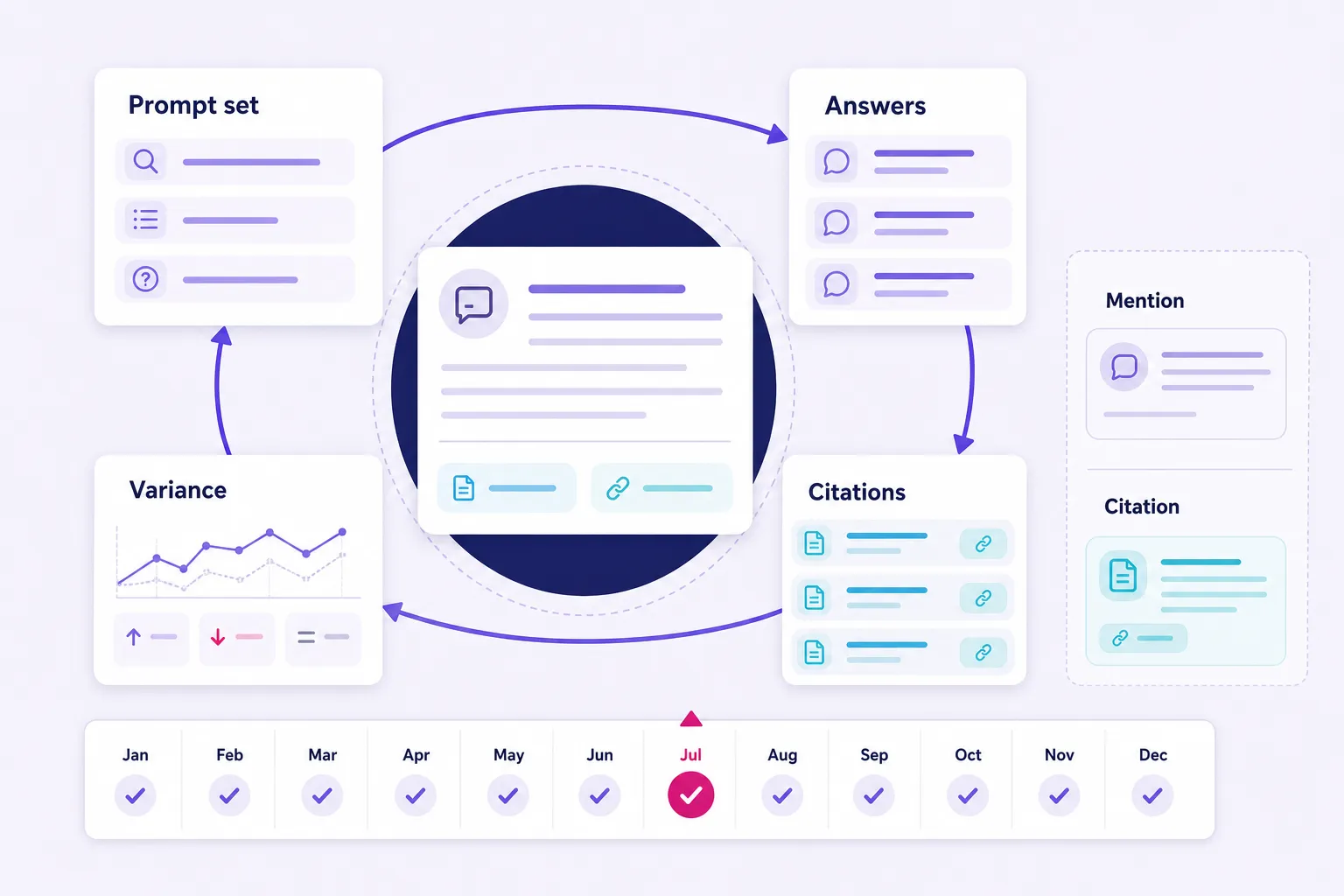
Step 8: Track AI Answer Engines as a Distinct Surface, Done Rigorously
This is the step that separates a 2024 setup from a 2026 one. Traditional monitoring was never built to see inside an answer.
Run a fixed prompt set on a schedule and score how often you appear, because there is no crawlable stream to listen to. Cover category shortlists ("best tools for X"), comparisons, "alternatives to competitor," reputation ("is Brand reliable"), objections ("common complaints about Brand"), and a source audit ("what sources support that"). Keep the core set stable so you can see drift, and add prompts only when buyer behavior changes.
The methodology matters more than the tool, because AI answers are unstable by design. Control for what you can: the same account state (logged in versus out), the same location, the same model version, the same date, and the same prompt order. Run each prompt several times, not once, and record the variance. Log the answer text, the brands named, the sources cited, whether the description is accurate, and whether you saw utm_source=chatgpt.com referral traffic land in analytics.
Two mechanics decide whether you get cited. First, third-party validation: models lean on what other trusted sources say about you, so active, accurate review and community profiles raise your odds. Second, entity clarity: if your name renders differently across your site, LinkedIn, directories, and press, the model fragments you and hesitates to cite. Accuracy audits belong here too, since a 2026 arXiv study of AI Overviews found 11.0% of atomic claims went unsupported by the pages cited. A confident wrong answer about your brand is a monitoring event, not a rounding error.
This is the second place BrandMentions fits a 2026 stack: keeping your live web and social mention stream in the same timeline as your AI answer-visibility checks, so a Reddit discussion spike and a shift in how ChatGPT describes you sit side by side instead of in two disconnected tools. Automated AI answer tracking is still an emerging capability across the whole category, so treat any tool's coverage of it as a supplement to your manual prompt audits, not a replacement for them yet.
We're still early here. I wouldn't trust any platform, including ours, to tell you the complete story of your AI visibility without human verification. The technology is moving too quickly, and the answers themselves are too dynamic.
Good monitoring should make that work easier, not pretend the uncertainty doesn't exist.
Free vs Paid: What Each Setup Actually Buys You
You do not need enterprise pricing to start. You need to know exactly what each tier can and cannot see.
| Setup | Best fit | Covers | Blind to | Time cost |
|---|---|---|---|---|
| Google Alerts + native search | Solo founder, early team | News, blogs, exact-name web mentions | Sentiment, most social, forums, AI answers | Low setup, high maintenance |
| GDELT | PR and issue research | Global news and web-scale media, volume timelines | Query and export learning curve | Medium |
| Review dashboards | Local, SaaS, app, marketplace | Direct reputation signal, response workflow | Fragmented across platforms | Medium |
| Cross-web monitoring tool | Growing marketing and comms teams | Query, source, sentiment, alerts, routing in one place | Needs query discipline to stay clean | Medium setup, low maintenance |
| Enterprise media intelligence | Large comms teams | Broad coverage, broadcast, governance | Nothing structurally, but priced for scale | Medium to high |
The zero-budget path is legitimate. Setting up Google Alerts catches exact-name coverage in a day, and stacking native platform search extends you into social. Just know the ceiling. Free tools are largely blind to sentiment, forum depth, deduplication, and the AI answer surface, which is exactly where 2026 signal concentrates. The honest tradeoff is time versus money: free setups shift the noise-filtering work onto you, manually, forever.
Your Measurement Schema and Maintenance Calendar
The dashboards that survive staff changes share one trait: a defined schema. Capture the same fields on every mention, so trends mean something and handoffs do not lose history.
Track, at minimum: mention ID, source, timestamp, author, reach proxy, source authority, intent class, sentiment, topic cluster, owner, SLA, action taken, and outcome. Two of these get skipped and both matter most. Action taken tells you whether the system produces decisions or just archives noise. Outcome tells you whether the decision worked.
Maintenance is a calendar, not a vibe. Weekly, review the wildcard query for language drift and add the week's new negative keywords. Monthly, audit the negative-keyword list, re-tune spike thresholds against real false alarms, and run the AI prompt set. Quarterly, revisit source priorities and re-check entity consistency across your profiles. After every campaign or crisis, run a short postmortem: what the query missed, how fast you saw it, and what rule you are adding so you catch it faster next time.
One more discipline for international brands. If you operate in more than one language, do not machine-translate one English query and call it coverage. Build native-language variants, transliterations, and local review and platform terms, and sample sentiment output per language, because polarity models degrade sharply on dialect and code-switched text. Sentiment is a hypothesis in English. In a second language, it is a rougher one.
Frequently Asked Questions
How often should I check brand mentions?
Match cadence to surface. Social and crisis monitoring runs in real time or hourly for the team that responds. General web and news fit a daily or weekly digest. AI answer engines update on model cycles, so a weekly or monthly prompt-set review beats real-time checking. Matching cadence to surface is what prevents alert fatigue.
Why do I get so many irrelevant brand mentions?
Almost always because the query is too broad or missing negative keywords. Add context requirements for ambiguous names, exclude predictable noise like job listings and unrelated products with NOT clauses, and test the query in small parts to find exactly what is leaking in. As a working heuristic, keep the real-time alerts off until fewer than 20% of results are false positives.
What is the difference between an AI brand mention and an AI citation?
A mention is when an answer engine names your brand in the text. A citation is when it links your page as a source. They are separate objects, and one does not guarantee the other. A model naming you without citing you usually signals it recognizes your brand but does not yet trust your content enough to link it, which tells you the problem is authority, not awareness.
Can I track brand mentions inside ChatGPT or Google AI Overviews automatically?
Not reliably through traditional crawlers, because the answer is generated per query with no stable public URL. Run a fixed prompt set on a schedule across the engines you care about, control for account, location, and model version, run each prompt several times, and log the results. Some tools are building automated AI tracking, but treat it as a supplement to manual audits, not a full replacement yet.
Conclusion: Monitoring Is Subtraction, Not Collection
The instinct behind bad brand monitoring is collection. Track more, capture everything, miss nothing. That instinct is exactly backward. Every team drowning in noise optimized for capture and never built the subtraction layer that turns a firehose into a signal.
The system in this playbook is one discipline applied at eight points: decide in advance what deserves attention, then engineer every stage, from query to source to alert to weighting to routing to the AI audit, to enforce that decision. The brands that win the next few years will not be the ones tracking the most mentions. They will be the ones who correctly ignored the most, and who noticed early that a new surface, the AI answer, started deciding which brands even enter the conversation.
Your next move is small and concrete. Pull one week of your current alerts and calculate your false-positive rate. If it is high, you do not have a monitoring problem. You have a query problem, and now you know exactly how to fix it.
After years in this space, I've become much less interested in the size of a monitoring database and much more interested in whether a team can answer three questions quickly: What changed? Why does it matter? And who needs to act?
Filed under: Brand Monitoring


2 comments